Crew Management Software for Ships: What Every Fleet Operator Needs to Know
Managing crews across a global fleet means juggling certifications, payroll, schedules, and regulatory compliance simultaneously. Here is how modern crew management software solves the hardest operational challenges in maritime HR.

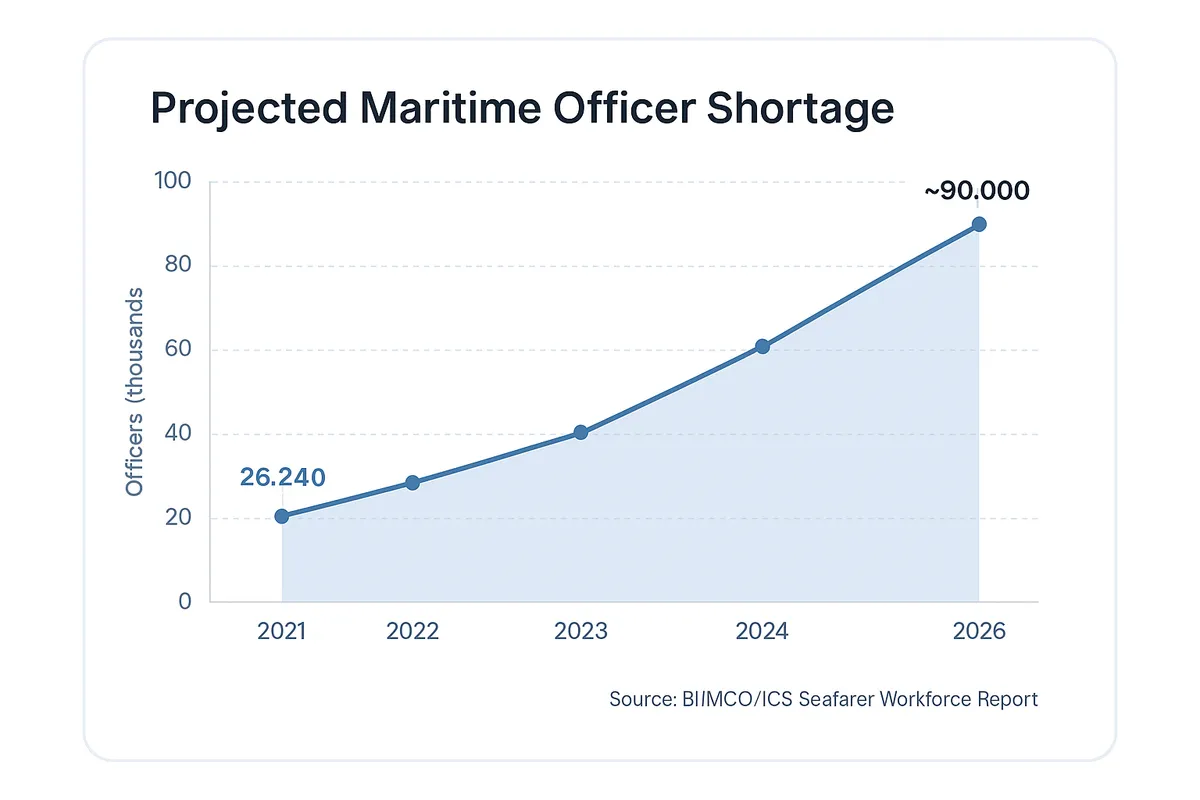
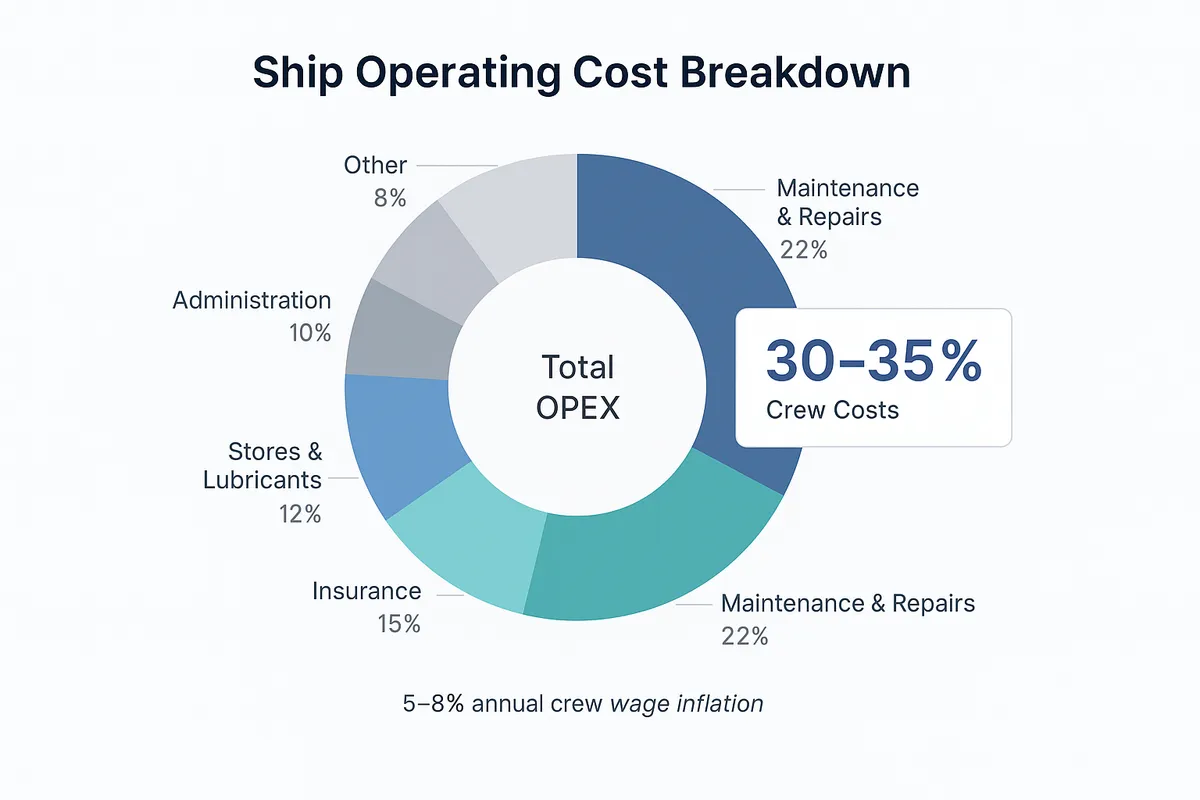
The maritime industry is heading toward a shortfall of nearly 90,000 officers by 2026, according to the BIMCO/ICS Seafarer Workforce Report. Crew costs now account for 30 to 35 percent of total ship operating expenses, with annual wage inflation running at 5 to 8 percent.
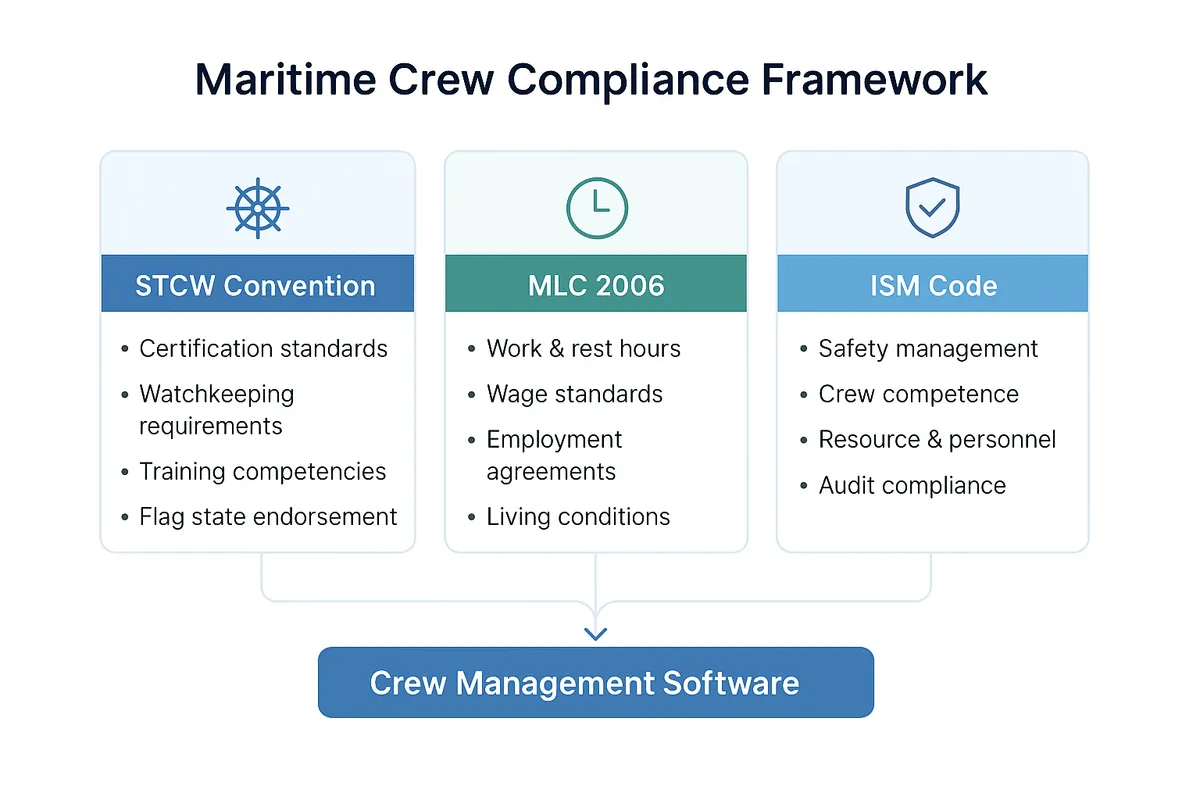
At the same time, regulatory requirements under the STCW Convention, MLC 2006, and the ISM Code are becoming more complex and more strictly enforced. For ship managers overseeing fleets of any size, the days of managing crew data through spreadsheets, email chains, and paper files are over.
Crew management software is the operational backbone that connects recruitment, scheduling, certification tracking, payroll, and compliance monitoring into a single platform. This guide covers what crew management software does, why fleet operators need it, and what to look for when choosing a system.
The Crew Management Challenge: Why Shipping Companies Are Struggling
The Officer Shortage Crisis
The BIMCO/ICS Seafarer Workforce Report estimates that 1.89 million seafarers currently serve the world merchant fleet, operating over 74,000 vessels. Despite this enormous workforce, the industry faces a current shortfall of more than 26,000 STCW-certified officers, a gap that is projected to grow to nearly 90,000 by 2026.
The shortage is especially acute at the management level, where experienced chief engineers, chief officers, and masters are retiring faster than they can be replaced.
The root causes are structural. An ageing workforce, declining interest in maritime careers among younger generations, and the lingering effects of the COVID-19 pandemic — which triggered a wave of early retirements — have combined to create a recruitment crisis.
A CNBC investigation found that nearly 20 percent of newly certified officers leave the profession within five years, citing long contracts, limited shore leave, and isolation at sea. For crew managers, every departure means restarting the recruitment cycle: advertising, screening, verifying certificates, arranging travel, and onboarding a replacement — all under time pressure.
Crew Costs Are Rising Faster Than Revenue
Crew-related expenditure is the single largest operating cost for most ship owners. Salaries, travel, training, insurance, and manning agency fees collectively account for 30 to 35 percent of total operating expenses.
With annual wage inflation running between 5 and 8 percent — driven by the officer shortage — companies that cannot optimise their crew planning processes face a direct hit to margins. Inefficient rotation scheduling leads to unnecessary travel costs, overtime payments, and relief delays that cascade into compliance violations.
The financial pressure is compounded by the cost of non-compliance. A single port state control detention can cost a ship operator tens of thousands of dollars in direct expenses, plus reputational damage that affects charter negotiations.
When the root cause is a crew documentation failure — an expired certificate, missing endorsement, or inadequately recorded rest hours — the cost is entirely avoidable.
Compliance Complexity Across Flag States
A ship manager operating a fleet under multiple flag states must navigate a patchwork of national regulations layered on top of international conventions. Each flag state interprets STCW certification requirements slightly differently.
Manning scales vary. Some flags require specific endorsements that others do not.
Tracking these variations manually across dozens of crew members and multiple vessels is a recipe for errors — errors that become apparent only during inspection, when it is too late to correct them.
Regulatory Framework: STCW, MLC 2006, and the ISM Code
STCW Convention — Certification and Watchkeeping
The STCW Convention, adopted by the IMO in 1978 and significantly amended by the 2010 Manila Amendments, sets the global minimum standards for the training, certification, and watchkeeping of seafarers. Every officer and rating serving on a seagoing merchant vessel must hold valid STCW certificates appropriate to their rank and function.
STCW Table A-II/1 through A-III/6 define competency requirements across seven functional areas at both operational and management levels. Beyond basic certificates, seafarers need:
- Endorsements for specific vessel types (tankers, passenger ships, IGF Code vessels)
- Special training certificates (GMDSS, medical care, security awareness)
- Flag state endorsements recognising foreign certificates
A single officer may hold 15 to 25 individual certificates, each with its own expiry date and renewal requirements.
A significant development came with IMO resolution MSC.541(107), adopted in June 2023 and enforced from January 2025, which formally allows electronic formats for seafarer certificates and endorsements. This removes the requirement for physical seals and photographs on digital documents, opening the door for fully digital certificate management — but only if the ship manager's systems can support it.
MLC 2006 — Hours of Work and Rest
The Maritime Labour Convention (MLC) 2006, often called the seafarers' bill of rights, establishes minimum standards for working and living conditions across the world's 1.5 million seafarers. MLC Regulation 2.3 caps work at 14 hours in any 24-hour period and 72 hours in any seven-day period.
The alternative measure requires a minimum of 10 hours of rest in any 24-hour period and 77 hours in any seven-day period.
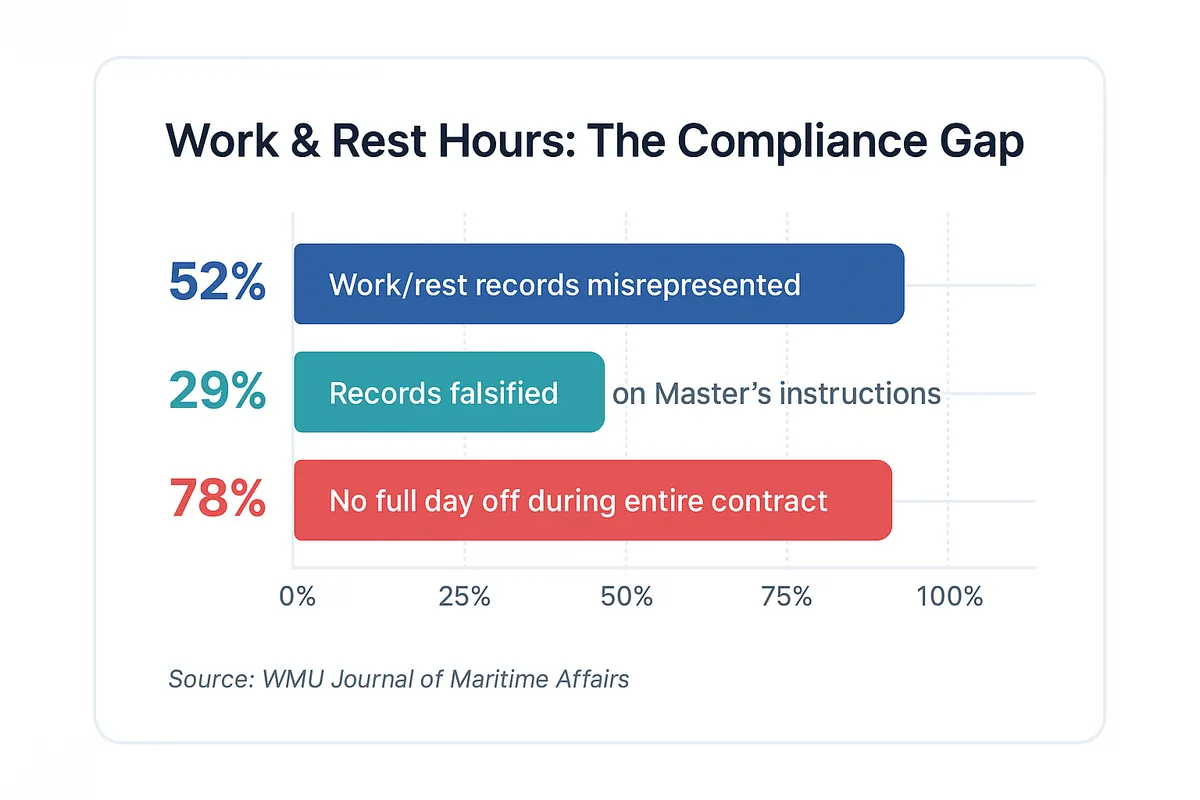
Compliance with these requirements is a serious challenge. A peer-reviewed study published in the WMU Journal of Maritime Affairs found that 52 percent of seafarers surveyed admitted their work and rest hours records were misrepresented, with 29 percent confirming they falsified records on the Master's instructions to avoid non-compliance findings.
This is not a technology problem alone — it reflects operational pressures that require systemic solutions — but it underscores the need for automated monitoring systems that can flag violations before they become audit findings.
ISM Code — Crew Competence Under the Safety Management System
The ISM Code, made mandatory under SOLAS Chapter IX, requires every ship management company to ensure that the ship is manned with qualified, certificated, and medically fit seafarers in accordance with national and international requirements. Section 6 of the ISM Code specifically addresses resources and personnel, requiring the company to establish procedures to ensure that new personnel and personnel transferred to new assignments are given proper familiarisation with their duties.
Evidence of these processes must be available for both internal and external audits of the Safety Management System.
What Crew Management Software Actually Does
Crew management software is a specialised platform that centralises every aspect of maritime human resource management. Unlike generic HR systems, it is built around the unique requirements of the shipping industry — multi-vessel operations, international regulations, rotational employment, multi-currency payroll, and the constant movement of personnel between ships and shore. Here are the core capabilities.
Crew Planning and Rotation Scheduling
Rotation planning is the central nervous system of crew management. The software shows every position on every vessel — who is assigned, when their contract ends, and who is available as relief. It factors in:
- Minimum manning requirements
- Required qualifications for each position
- Rest period requirements between contracts
- Visa and travel restrictions
- Individual preferences where possible
Advanced systems generate optimised rotation plans that minimise crew change costs while ensuring compliance with flag state manning certificates.
Certificate and Document Tracking
Every seafarer carries a portfolio of documents:
- Certificates of competency
- Flag state endorsements
- Medical certificates
- Passports and visas
- Company-specific training records
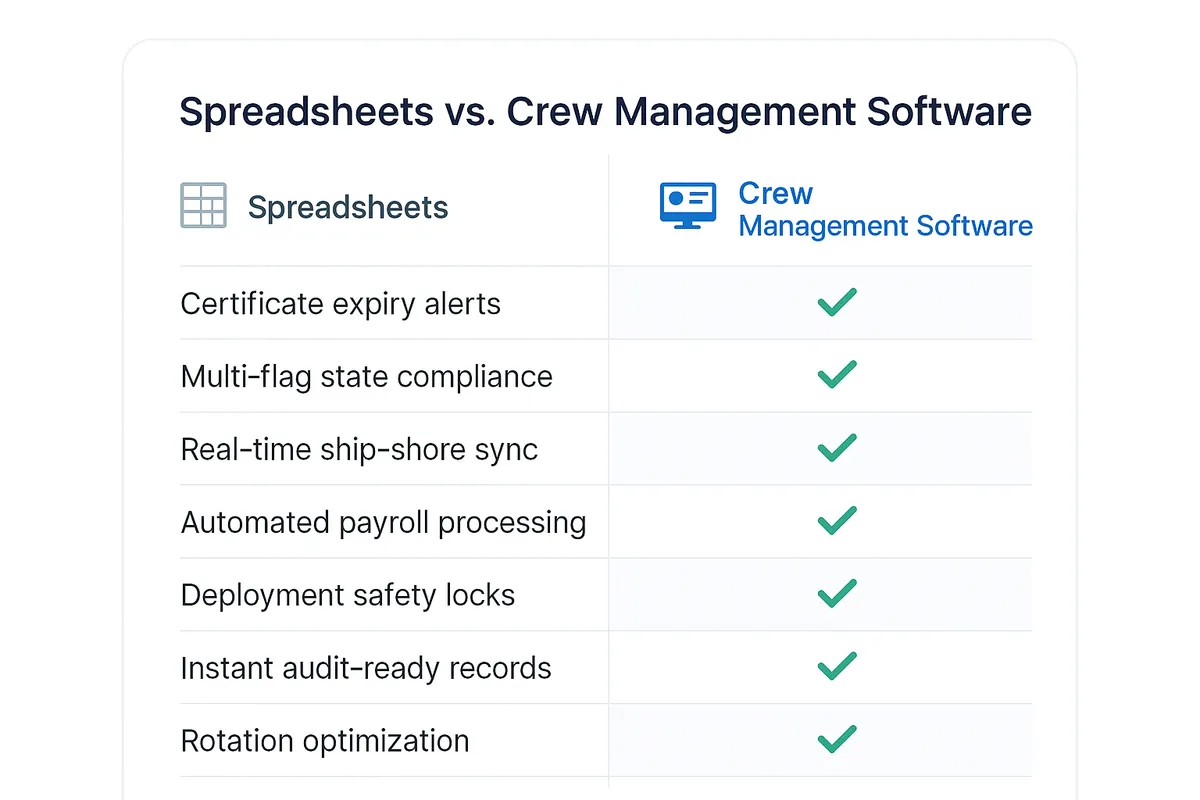
Crew management software stores digital copies of every document, tracks expiry dates, and sends automated alerts well before expiration. The system blocks deployment if any required document is missing or expired. This single feature alone has prevented countless port state control detentions.
Payroll and Multi-Currency Wage Processing
Maritime payroll is unlike any other industry. Seafarers may be paid in one currency but have allotments sent to family in another. Tax obligations vary by:
- Nationality
- Flag state
- Number of days spent at sea
Collective Bargaining Agreements with different unions set different pay scales, leave entitlements, and overtime rates. Crew management software automates these calculations and handles multi-currency disbursements.
For fleet operators, this eliminates payroll errors that damage seafarer trust and retention.
Work and Rest Hours Monitoring
Monitoring work and rest hours is one of the most compliance-sensitive functions in crew management. The software records daily work and rest periods for every crew member, cross-references them against STCW and MLC limits, and flags violations in real time.
Integrated work and rest hours modules can also identify patterns of chronic non-compliance that indicate systemic issues — such as undermanning on specific watch rotations — before they result in fatigue-related incidents.
Recruitment and Onboarding
The recruitment pipeline in maritime is uniquely complex. A fleet operator may source candidates from manning agencies in multiple countries, each with different documentation standards and verification processes.
Crew management software provides a centralised candidate database, tracks application status through screening, interview, medical examination, and onboarding stages, and ensures that every new hire's qualifications are verified against the specific requirements of the vessel and flag state they will serve on. Some systems integrate directly with manning agency databases, eliminating duplicate data entry and reducing the time-to-hire significantly.
Training and Competency Management
Beyond statutory STCW training, ship management companies run extensive in-house training programmes covering company-specific procedures, emergency response drills, cargo-specific operations, and equipment-specific familiarisation. A crew management system with integrated training management tracks every training course completed by every seafarer, identifies gaps against competency matrices, and schedules refresher courses before certifications expire.
This creates a verifiable training history for each individual that satisfies both ISM Code requirements and vetting inspection questionnaires.
Five Signs You Have Outgrown Spreadsheet-Based Crew Management
Many ship management companies start with spreadsheets and email-based workflows for crew management. This works until it does not. Here are the signs that a company has outgrown manual processes:
- Certificate expiry surprises. If expired certificates are discovered during port state control inspections rather than weeks in advance, the tracking system has failed. A single expired certificate can trigger a detention that costs more than a year's subscription to crew management software.
- Crew changes are consistently late. When relief planning happens reactively rather than proactively, the company ends up paying premium airfares, extending contracts beyond comfortable limits, and creating resentment among crew. Late crew changes are a symptom of poor visibility into rotation schedules.
- Payroll errors trigger complaints. Maritime payroll involves overtime calculations, leave accruals, allotment splits, multi-currency conversions, and CBA-specific rates. When these are calculated manually, errors are inevitable. Repeated payroll mistakes erode the trust that keeps good seafarers coming back.
- Audit preparation takes days, not hours. If preparing for a DOC or SMC audit means scrambling to assemble crew records from multiple spreadsheets, email threads, and filing cabinets, the company is wasting time that could be spent on operational improvement. A crew management system should make any crew record retrievable in seconds.
- No single source of truth. When the crewing department, the operations team, and the vessel each maintain different versions of the crew list, discrepancies are guaranteed. During an emergency — a medical evacuation, a grounding, or a port state inspection — conflicting records create confusion at the worst possible time.
How Modern Ship Management Platforms Handle Crew Operations
The most effective approach to crew management is not a standalone crewing tool but an integrated module within a broader ship management platform. When crew data flows seamlessly into safety management, maintenance planning, procurement, and financial reporting, the entire operation becomes more coherent.
Systems like Navatom's Crew Manager module are designed around this principle — crew management is not isolated from the rest of fleet operations.
An integrated platform means that when a crew member is assigned to a vessel, the safety management system automatically updates drill records and familiarisation checklists. When a certificate is about to expire, the training module can schedule the required refresher course.
When payroll is processed, the financial module captures the cost against the correct vessel and cost centre. This level of integration eliminates the data silos that cause errors and delays in companies using separate tools for each function.
Cloud-based crew management software adds another critical advantage: real-time synchronisation between ship and shore. The crew on board can update their work and rest hours records, and the shore-based crewing team sees the data immediately — without waiting for email reports or USB file transfers at the next port. This real-time visibility is what allows proactive management rather than reactive firefighting.
Choosing the Right Crew Management System
Not all crew management software is created equal. When evaluating options, fleet operators should consider the following criteria:
- Regulatory coverage. Does the system track STCW, MLC, and flag state-specific requirements out of the box? Can it handle multiple flag states simultaneously?
- Integration depth. Is crew management a module within a complete ship management platform, or a standalone system that requires manual data transfer to other tools?
- Ship-shore synchronisation. Can the crew on board access and update records in real time, or does the system depend on batch file transfers?
- Payroll flexibility. Does the system support multi-currency payroll, CBA-specific calculations, allotment management, and jurisdiction-specific tax rules?
- Reporting and audit readiness. Can crew records be retrieved and presented for internal audits, DOC verifications, port state inspections, and vetting inspections within minutes?
- Scalability. Can the system handle fleet growth — from five vessels to fifty — without requiring a new platform or architecture change?
Key Takeaways
- The industry faces a projected shortfall of 90,000 officers by 2026. Crew management software helps companies compete for scarce talent by streamlining recruitment, onboarding, and retention processes.
- STCW, MLC 2006, and the ISM Code impose overlapping compliance requirements on crew documentation, certification, work hours, and competency. Manual tracking is no longer viable at scale.
- Automated certificate tracking, with expiry alerts and deployment locks, prevents the documentation failures that cause port state control detentions.
- Work and rest hours monitoring must be real-time, not retrospective. Automated compliance checking catches violations before they become audit findings.
- The greatest value comes from crew management integrated within a full ship management platform, where crew data connects to safety, maintenance, procurement, and finance.
- Cloud-based, real-time ship-shore synchronisation eliminates the data lag that causes errors and delays in crew operations.
If you are evaluating crew management solutions for your fleet, explore Navatom's Crew Manager module to see how integrated, cloud-native crew management works in practice.
Frequently Asked Questions
What is crew management software?
Crew management software is a digital platform designed specifically for the maritime industry that centralises seafarer data, automates crew planning and rotation scheduling, tracks certificates and training records, manages payroll across multiple currencies and jurisdictions, and monitors work and rest hours compliance. It replaces manual spreadsheets with a system that ensures regulatory compliance while reducing administrative workload.
How does crew management software help with STCW compliance?
The software maintains a complete digital record of every certificate and endorsement held by each seafarer, tracks expiry dates with automated alerts, and prevents deployment of crew members whose certificates do not meet the requirements of the vessel's flag state and trading area. This ensures that no crew member serves on board without valid STCW certification, which is one of the most common findings during port state control inspections.
What is the difference between crew management and crew payroll software?
Crew payroll software focuses specifically on wage calculation, allotment processing, and financial reporting. Crew management software is broader — it encompasses the entire lifecycle from recruitment through scheduling, certification, training, payroll, and performance evaluation.
The best crew management systems include payroll as an integrated module rather than requiring a separate tool, ensuring that contract terms, CBA rates, and working time records feed directly into payroll calculations without manual data transfer.
Can crew management software help prevent work and rest hours violations?
Yes. Modern crew management software monitors daily work and rest hour entries against STCW and MLC limits in real time.
When a crew member's recorded hours approach or exceed the limits, the system generates immediate alerts to the Master and shore-based management. Some systems can also analyse patterns over time to identify chronic non-compliance that may indicate structural undermanning issues, allowing the company to take corrective action before a fatigue-related incident occurs.
How do I choose the right crew management system for my fleet?
Focus on three factors: regulatory coverage (does the system handle your flag states and applicable conventions), integration depth (is crewing connected to your safety, maintenance, and financial systems), and ship-shore synchronisation (can the vessel and office work from the same real-time data). A standalone crewing tool may solve one problem but create data silos.
A crew management module within an integrated ship management platform solves the underlying operational challenge. For more on building a crew strategy, see our guide on seafarer recruitment and retention.