
Benefits
Why Training?
Key advantages of Training as part of Navatom's integrated platform.
Structured Training Programs Across Your Entire Fleet
Versioned curricula, structured checklists, and controlled approval workflows ensure every vessel in your fleet follows the same approved training program. No more inconsistent training quality between vessels or outdated material in circulation.
ISM/STCW-Compliant Training Records from Day One
Immutable event logs, structured attendance records, and full traceability mean your training records are always inspection-ready. ISM Code, STCW, and flag state auditors will find a clean, chronological record of every training activity with curriculum version linkage.
Ship Crews Can Start Training When the Moment Is Right
Ad-hoc training initiation lets vessels respond to immediate training needs — new crew arrivals, equipment changes, near-miss follow-ups — without waiting for office scheduling. Flexibility without sacrificing documentation standards.
Every Training Session Documented with Full Attendance
Attendee tracking with 29 onboard ranks, rich text reports, file attachments, and structured checklists create a complete documentary package for every session. No more missing sign-off sheets or incomplete training records.
Fleet-Wide Training Intelligence and Compliance Tracking
Dashboard widgets and analytics aggregate training completion, review status, and coverage data across your entire fleet. Identify vessels falling behind on training schedules, track competency gaps, and demonstrate fleet-wide compliance to charterers and regulators.
Scales from Single Vessel to Global Fleet
Server-side pagination, secure company data isolation, and office-ship synchronization mean the system performs identically whether you manage one vessel or five hundred. Grow your fleet without outgrowing your training platform.
Navatom Training is the onboard crew training management platform for maritime fleet operators — enabling your office and vessel teams to define, schedule, and track training programs across the entire fleet with versioned curricula, structured assessments, full attendee tracking, and compliance documentation. It replaces ad-hoc spreadsheets, paper sign-off sheets, and disconnected training logs with a controlled, cloud-synchronized training system that gives your training officers, fleet HR, and vessel masters a single source of truth.
Built around a six-stage curriculum lifecycle (Draft, Waiting for Approval, Completed/Rejected, Released, Revised), the module ensures your crew always trains from approved, controlled material. Five assessment question types — Checkbox, Staged, Inquiry, Single Choice, and Multiple Choice — capture structured evaluation data that goes far beyond a simple attendance signature.
A three-status training lifecycle (In Progress, Completed, Reviewed) with office review oversight ensures every session is documented, evaluated, and approved.
Ship crews can initiate ad-hoc training sessions when the moment is right — no waiting for office scheduling. Twenty-nine onboard ranks across Deck and Engine departments ensure precise attendee identification.
Calendar integration, yearly planning views, rich text reports with file attachments, and a complete audit trail of 32 event types transform training from a checkbox exercise into a fleet-wide competency management system.
Capabilities
Key Features
How Training helps ship managers work faster and stay compliant.

Onboard Crew Training Management
Conduct structured training sessions directly on your vessels with a purpose-built onboard training platform. Every session captures the training topic, curriculum reference, date, location, instructor, and attendee roster — creating a complete documentary record that satisfies ISM Code and STCW requirements.
Training sessions are not just calendar entries — they are structured records with checklists, reports, file attachments, and comment threads. The system guides your training officer through a consistent process from session creation through completion and office review.
Versioned Training Curriculum System
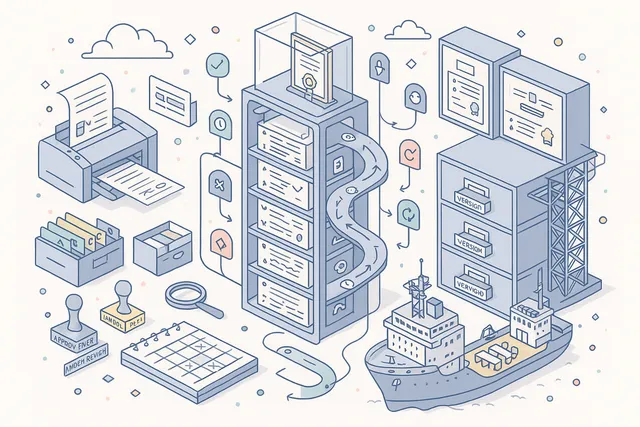
Build reusable training definitions with a full six-stage lifecycle: Draft, Waiting for Approval, Completed/Rejected, Released, and Revised. Only Released curricula can be used for live training sessions, ensuring your crew always trains from approved, controlled material.
Import templates from your library to bootstrap new curricula. Clone and revise existing definitions without losing the original.
The versioning system maintains a complete history of every curriculum change, so you always know which version was used for any given training session and can demonstrate controlled document management to auditors.
- Six-stage definition lifecycle
- Draft to Released approval workflow
- Template import & cloning
- Version history tracking
- Controlled revision management
Structured Assessment Checklists
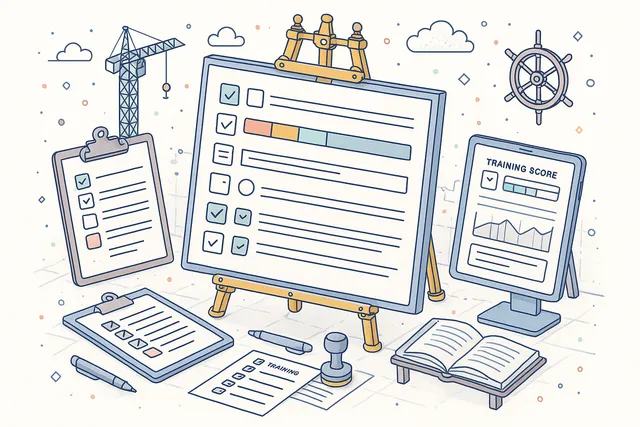
Evaluate crew competency with five question types — Checkbox, Staged, Inquiry, Single Choice, and Multiple Choice. Each checklist item captures the specific evidence your training officer needs to assess, with structured response formats that drive consistent, comparable results across sessions and vessels.
Staged items support progressive assessment (e.g., Not Demonstrated / Partially Demonstrated / Fully Demonstrated). Inquiry items capture free-text observations.
Choice items enforce selection from predefined options. Organize questions into hierarchical categories to mirror your training curriculum structure.
- Checkbox, Staged, Inquiry types
- Single & Multiple Choice questions
- Progressive staged assessments
- Hierarchical category organization
- Reusable checklist templates
Three-Status Training Lifecycle
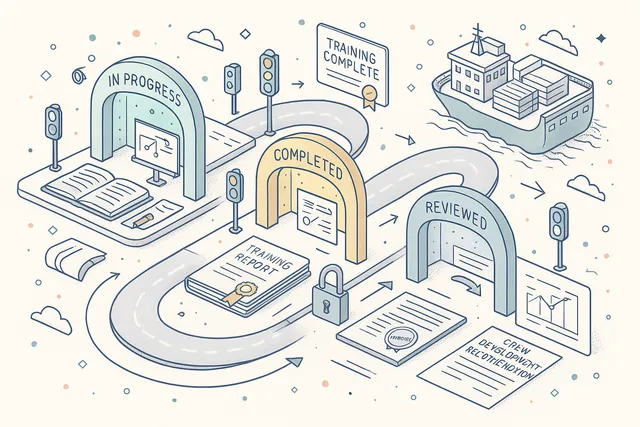
Every training session follows a controlled lifecycle: In Progress while being conducted, Completed when the training officer finishes, and Reviewed once the office has evaluated the session. Status transitions enforce data completeness — a session cannot be completed without the required checklist responses and attendee records.
The three-status model provides clear visibility into where each training session stands. Fleet managers can instantly see which sessions are underway, which await review, and which have been fully processed.
Status-based filtering lets you focus on the sessions that need attention right now.
- InProgress → Completed → Reviewed
- Status-enforced data completeness
- Clear session visibility
- Fleet-wide status filtering
Full Attendee Tracking
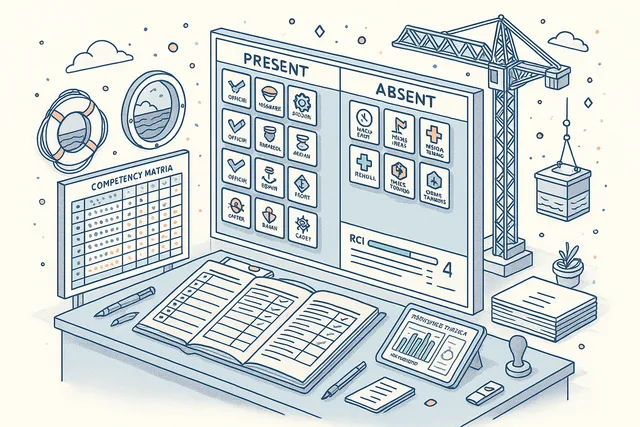
Record exactly who attended each training session with a structured crew attendance roster. Add and remove attendees by name and rank, with support for all 29 onboard ranks across Deck and Engine departments.
The attendee list creates the documentary evidence that your crew received the required training.
Attendee tracking goes beyond a simple sign-off sheet. Each attendee record is linked to the crew member profile, enabling fleet-wide queries: Which crew members have completed fire safety training?
Who is overdue for lifeboat drill competency assessment? The structured data feeds into compliance reporting and crew competency dashboards.
- 29 onboard ranks supported
- Deck & Engine departments
- Add/remove attendee logging
- Crew profile linkage
- Fleet-wide attendance queries
Ship-Initiated Ad-Hoc Training
Not every training need can be scheduled months in advance. The canShipStartUnscheduled flag allows vessel crews to initiate training sessions immediately — responding to equipment changes, near-miss events, new crew arrivals, or regulatory updates without waiting for office approval of a new schedule.
Ad-hoc sessions follow the same structured process as scheduled training: curriculum reference, checklists, attendee tracking, and office review. The only difference is the initiation point.
This flexibility ensures your vessels can respond to training needs in real time while maintaining full documentation standards.
- canShipStartUnscheduled flag
- Immediate training initiation
- No office pre-scheduling required
- Same documentation standards
- Responsive to real-time needs
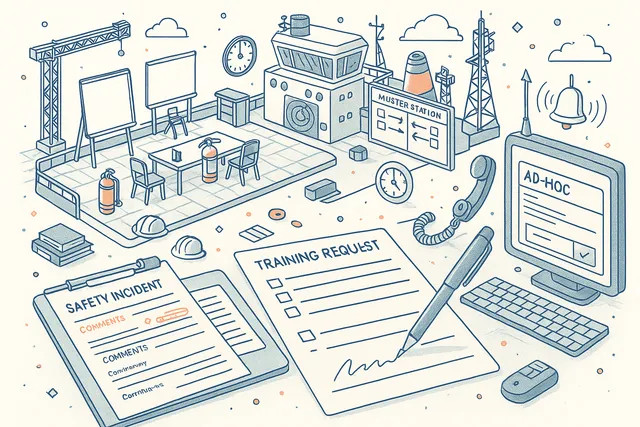
Office Review & Oversight
Shore-based training managers and DPAs review every completed training session before it is finalized. The office review step ensures that training quality is maintained across the fleet, checklist responses are adequate, and attendance records are complete.
Reviewers can add comments, request additional information, or flag concerns directly within the training record. The review workflow creates an additional accountability layer — vessel crews know their training will be evaluated, and the office has documented evidence of oversight for ISM compliance.
- Shore-based session review
- DPA quality evaluation
- Comment & feedback workflow
- Documented oversight evidence
- ISM compliance accountability
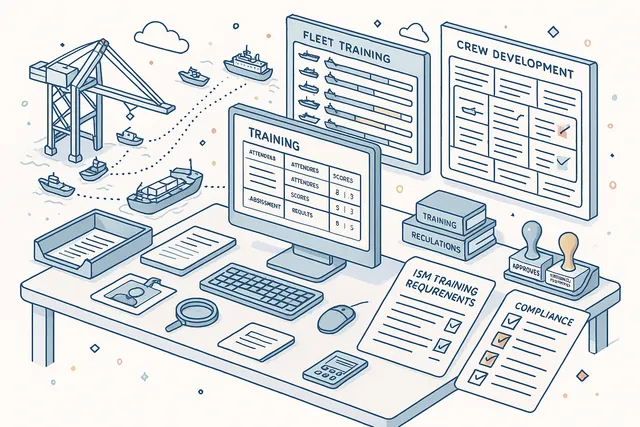
Ship-Based Scheduling & Assignment
Assign training definitions to specific vessels and schedule sessions across your fleet. Support for all 29 onboard ranks across Deck and Engine departments ensures that training assignments reach the right crew members.
Each vessel receives its tailored training program based on vessel type, trade area, and crew composition.
Scheduling supports both one-time and recurring training events. Assign a fire safety curriculum to all tankers quarterly, or schedule a bridge team management refresher for specific vessels before a trade route change. The assignment system maintains the link between curriculum definition and vessel execution.
- Per-vessel training programs
- 29 rank-based assignments
- Deck & Engine department targeting
- One-time & recurring scheduling
- Vessel type & trade area filtering
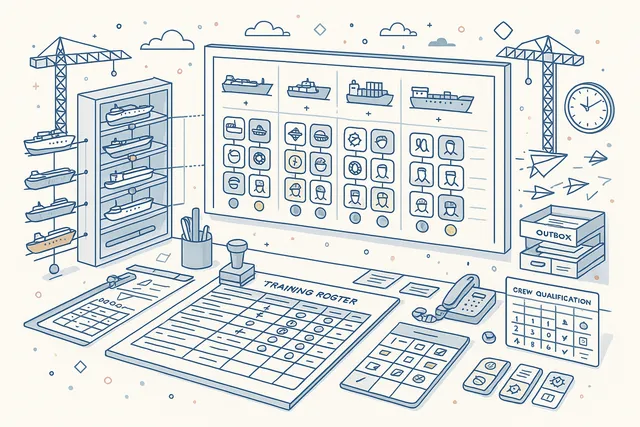
Yearly Training Planning
Plan your entire annual training program in a dedicated yearly planning view. A visual scheduling grid lets you map training sessions across vessels, months, and curriculum topics — giving fleet HR and training managers a complete overview of the training calendar for the year ahead.
Identify gaps in training coverage, ensure regulatory requirements are met within required timeframes, and balance training load across the fleet. The yearly plan integrates with the training calendar, so scheduled sessions automatically appear in crew and management planning views.
- Visual annual scheduling grid
- Per-vessel training coverage mapping
- Gap identification across fleet
- Calendar integration for planned sessions
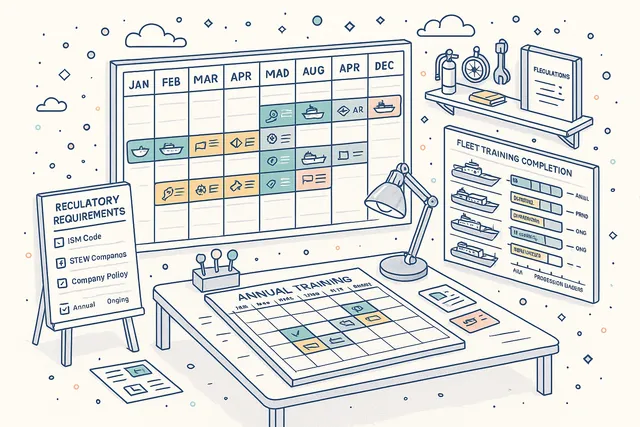
Calendar Integration
Schedule training sessions directly into the Navatom calendar system. Each session creates a calendar event with date, time, and assigned vessel.
Support for recurring schedules — Daily, Weekly, Monthly, and Yearly — handles everything from weekly safety briefings to annual regulatory refresher courses.
Recurring training schedules automatically generate future session events based on your configured frequency. Calendar visibility ensures training officers, vessel masters, and shore management all see upcoming sessions in their planning views, reducing missed training and scheduling conflicts.
- Automatic calendar event creation
- Daily, Weekly, Monthly, Yearly recurrence
- Fleet-wide calendar visibility
- Scheduling conflict prevention
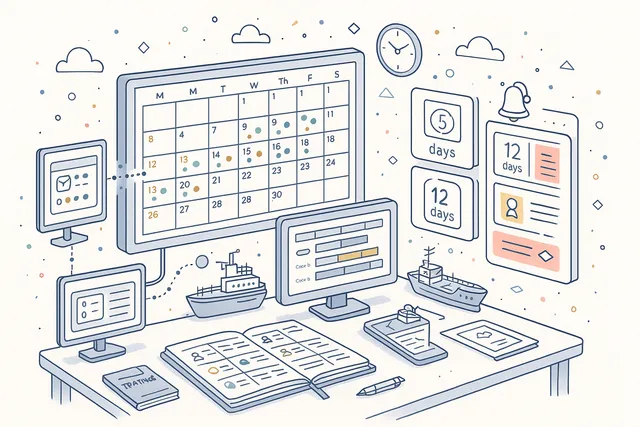
Rich Text Reports & File Attachments
Document training outcomes with a rich text editor that supports formatted reports, inline notes, and structured observations. Attach supporting files — photos, certificates, assessment forms, presentation materials — directly to the training record for a complete documentary package.
The report editor goes beyond plain text: format key findings, highlight areas for improvement, and structure your training evaluation in a professional format. Attached files are stored alongside the training record, ensuring that all supporting evidence is accessible from a single location.
- Rich text editor for reports
- Photo & certificate attachments
- Inline notes & observations
- Complete documentary package
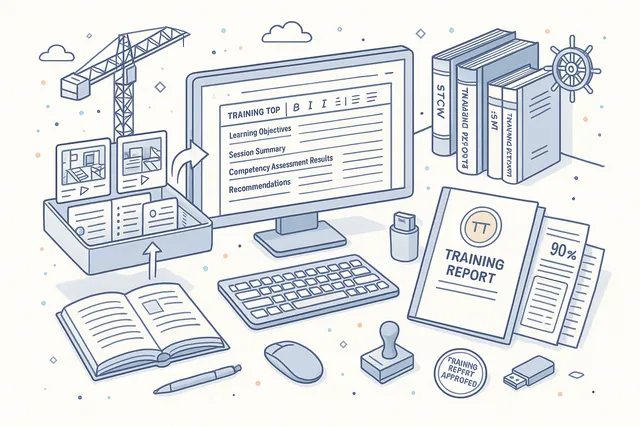
Threaded Comments & Collaboration
Communicate about training sessions with per-session comment threads. Training officers, reviewers, and fleet managers can discuss session outcomes, request clarifications, and share observations directly within the training record — keeping all communication in context.
Comments are timestamped and attributed, creating a documented conversation trail. Unlike email threads that get lost, training comments remain permanently attached to the session record and are visible to anyone with access to the training module.
- Per-session comment threads
- Timestamped & attributed messages
- Cross-team communication
- Permanent conversation trail
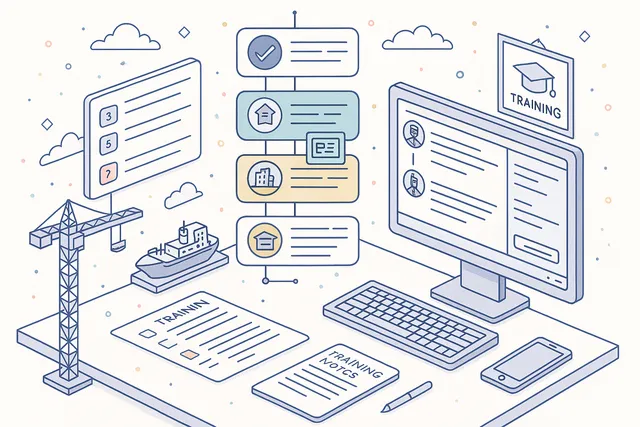
Complete Audit Trail
Every action within a training session is recorded in a granular event log with 32 event types — 14 operation events and 18 meta events. From session creation and attendee changes through file uploads and status transitions, the event stream provides a complete narrative of the entire training process.
Operation events track session-level actions: Created, AddedFile, RemovedFile, EditedFile, Comments, UpdatedReport, StatusChanged, Reviewed, RemoveReview, AddedAttendee, RemovedAttendee, and SetAttendees. Meta events track curriculum-level actions: definition workflow transitions, checklist modifications, release and deprecation, and ship assignment changes.
- 14 operation event types
- 18 meta event types
- Full user attribution per event
- Immutable event history
- Complete process reconstruction
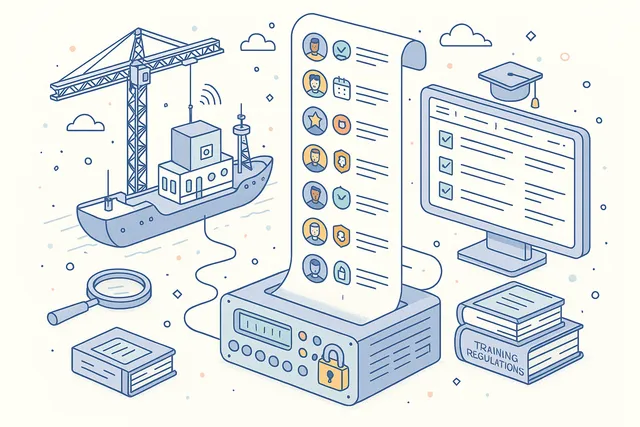
Dashboard & Analytics
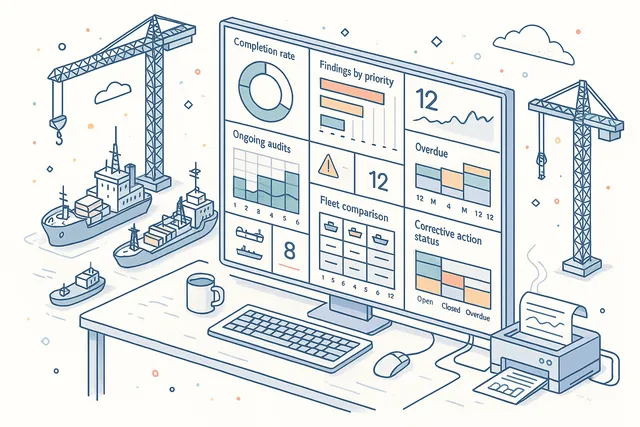
Monitor your training program's health with dedicated dashboard widgets. Track completion rates, review status, upcoming sessions, and training coverage across your entire fleet.
At-a-glance KPIs tell training managers which vessels are on track and which need attention.
Drill down from any widget to the underlying training data. Filter by vessel, curriculum topic, date range, or status to analyze specific segments of your training program.
Dashboard views aggregate data fleet-wide, giving management the oversight they need for ISM compliance reviews.
- Dedicated training dashboard widgets
- Completion rate tracking
- Review status monitoring
- Fleet-wide coverage analysis
- Drill-down to session detail
Version History & Browsing
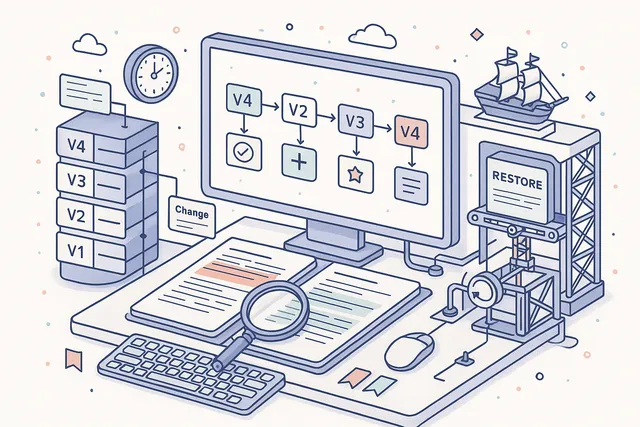
Browse the complete version history of any training curriculum. See every revision, who made it, when it was approved, and what changed.
Compare versions side by side to understand how your training material has evolved over time.
Version browsing supports compliance requirements by demonstrating controlled document management. When an auditor asks "which version of this curriculum was used for that training session?", the answer is one click away — with full traceability from session back to the exact curriculum version.
- Full curriculum version history
- Side-by-side version comparison
- Approval & change tracking
- Session-to-version traceability
FAQ
Frequently Asked Questions
Common questions about Training answered.
What types of training sessions does the module support?+
Navatom Training supports both scheduled and ad-hoc onboard crew training sessions. Scheduled sessions are planned through the yearly planning view and calendar system with recurring options (Daily, Weekly, Monthly, Yearly).
Ad-hoc sessions can be initiated directly by vessel crews when the canShipStartUnscheduled flag is enabled — for responding to immediate training needs like new crew arrivals, equipment changes, or near-miss follow-ups.
How does the training curriculum system work?+
Training curricula follow a six-stage lifecycle: Draft, Waiting for Approval, Completed/Rejected, Released, and Revised. Only Released curricula can be used for live training sessions.
You can import templates, clone existing definitions, and revise them without losing the original version. The system maintains complete version history, so you always know which curriculum version was used for any given session.
Can ship crews start training without office scheduling?+
Yes. When the canShipStartUnscheduled flag is enabled for a training definition, vessel crews can initiate sessions immediately without waiting for office scheduling.
Ad-hoc sessions follow the same structured process — curriculum reference, checklists, attendee tracking, and office review — maintaining full documentation standards while providing operational flexibility.
How is crew attendance tracked?+
Every training session has a structured attendee roster. Crew members are added by name and rank, with support for all 29 onboard ranks across Deck and Engine departments.
Attendee changes are logged as events (AddedAttendee, RemovedAttendee, SetAttendees), creating an immutable record of who attended each session. Attendance data feeds into fleet-wide compliance reporting.
Does the module work offline on vessels?+
Yes. Vessels operate with a full local deployment that processes training sessions, checklists, reports, and attendee records independently of office connectivity.
All training workflows function offline. When satellite connectivity is available, changes synchronize automatically with the office system, including conflict resolution.
What assessment methods are available for evaluating training?+
The module provides five checklist question types: Checkbox (yes/no verification), Staged (progressive assessment like Not Demonstrated / Partially / Fully), Inquiry (free-text observations), Single Choice (select one from predefined options), and Multiple Choice (select multiple). Questions are organized in hierarchical categories to mirror your curriculum structure.
How does office review work?+
After a vessel training officer marks a session as Completed, it enters the Reviewed stage where shore-based training managers or DPAs evaluate the session. Reviewers can inspect checklist responses, attendance records, reports, and attached files.
They can add comments, request additional information, or approve the session. The review workflow creates documented evidence of shore oversight for ISM compliance.
Glossary
Related Maritime Terms
Key terms and concepts related to Training.
Related Modules
Plan, execute, and evaluate emergency drills with crew participation tracking.
Conduct and record management reviews with structured agendas and action tracking.
Create and manage risk assessments, hazard identification, and mitigation measures.
Ready to try Training?
Start your free trial today and see how Training fits into your fleet operations.
Free Trial
No credit card required
30+ Modules
Fully integrated platform
Cloud-Based
No installation needed