
Benefits
Why Inventory?
Key advantages of Inventory as part of Navatom's integrated platform.
Complete Stock Visibility Across Your Fleet
See real-time on-hand quantities across every vessel, warehouse, and shore facility in a single view. No more calling ships for stock checks, no more reconciling spreadsheets — one platform, one truth, fleet-wide.
Purpose-Built Workflows for Every Transaction
Seven journal types mean every inventory transaction follows the right workflow — not a generic one-size-fits-all process. Arrivals link to POs. Adjustments require reasons. Transfers track in-transit. The right process, every time.
Audit-Ready from Day One
Immutable event logs, mandatory reason codes, and full approval traceability mean your inventory records are always inspection-ready. ISM, ISO, TMSA, and class society audits become a matter of pulling reports, not scrambling for evidence.
Controlled, Compliant Stock Movements
Multi-tier approval workflows and dual-control authorization ensure that high-value transfers, critical stock adjustments, and inter-vessel movements get the oversight they require — without slowing down routine operations.
From Reactive Correction to Proactive Improvement
Reason-based analytics transform stock adjustments from isolated corrections into actionable intelligence. Spot patterns in damage, loss, and discrepancy data to fix processes — not just numbers.
Scales from Single Vessel to Global Fleet
Server-side pagination, secure company data isolation, and office-ship synchronization mean the system performs identically whether you manage 1 vessel or 500. Grow your fleet without outgrowing your inventory platform.
Navatom Inventory is the operational nerve center for fleet stock management — tracking every spare part, consumable, and material across all vessels and shore warehouses in real time. It replaces fragmented spreadsheets and manual tallies with a unified, cloud-synchronized inventory platform that gives your supply chain, technical, and operations teams a single source of truth.
Built around seven specialized journal types — Adjustment, Arrival, Counting, Movement, Internal Transfer, Ownership Transfer, and Transfer — each transaction follows its own purpose-built workflow with configurable multi-tier approval chains, reason codes, and a complete, immutable audit trail. Whether you are receiving goods against a purchase order, correcting a stock discrepancy, or transferring spares between vessels, Inventory ensures the right process is followed every time.
Three dedicated on-hand views give you instant visibility into your fleet's stock position: Unrestricted Stock for day-to-day availability, Coverage Analysis for min/max/optimal planning, and Expiry Monitoring for batch lifecycle management. Combined with multi-dimensional tracking across batch, serial, owner, status, and space, Navatom Inventory delivers the precision and control that maritime operations demand.
Capabilities
Key Features
How Inventory helps ship managers work faster and stay compliant.

Seven Specialized Journal Types
Not all inventory transactions are created equal. Navatom Inventory provides seven distinct journal types — Adjustment, Arrival, Counting, Movement, Internal Transfer, Ownership Transfer, and Transfer — each with its own purpose-built workflow, validation rules, and approval chain.
Adjustment journals handle stock corrections with mandatory reason codes. Arrival journals link to purchase orders for goods receipt.
Counting journals support physical inventory with blind counting and variance analysis. Movement journals track within-location space changes.
Internal Transfer and Transfer journals manage between-location and between-vessel movements with dual-approval and in-transit tracking. Ownership Transfer journals handle legal entity changes without physical movement.
Real-Time On-Hand Visibility
See your fleet's entire stock position in three dedicated views: Unrestricted Stock for day-to-day availability across all locations, Coverage Analysis for comparing actual quantities against min/max/optimal targets, and Expiry Monitoring for tracking batch shelf life across the fleet.
Each view adapts dynamically to the tracking dimensions enabled for each material — batch-tracked items show batch columns, serial-tracked items show serial columns. Server-side rendering handles hundreds of thousands of stock records without browser memory limits, and every number drills down to the transactions behind it.
- Unrestricted stock view
- Coverage analysis dashboard
- Expiry monitoring board
- Adaptive tracking dimensions

Hierarchical Location & Space Management
Organize your physical storage with a Locations → Spaces hierarchy that mirrors your real-world layout. Each location represents a vessel, warehouse, or shore facility.
Within each location, define unlimited spaces — holds, stores, decks, shelves, bins — to track exactly where every item sits.
The location detail view provides nine dedicated tabs covering general information, spaces, stock overview, coverage settings, transactions, and more. Map spaces to ship sections for intuitive navigation, and let your crew find the right part in the right place without guessing.
- Location → Space hierarchy
- 9-tab detail view per location
- Ship section mapping
- Bulk space operations

Multi-Tier Approval Workflows
Every journal type supports configurable approval rules that evaluate automatically at each workflow transition. Define criteria based on transaction value, quantity, material type, location, or any combination — and route approvals to the right authority level.
Multi-tier escalation ensures high-value or high-risk transactions get additional oversight. Authorization rules enforce dual-control for critical operations like inter-vessel transfers, and the system tracks every approval decision with full attribution for audit purposes.
- Configurable approval criteria
- Multi-tier escalation rules
- Authorization rule templates
- Dual-control for sensitive moves

Multi-Dimensional Tracking
Track inventory with the precision your operation demands. Enable up to five tracking dimensions per material — Batch, Serial Number, Owner, Status, and Space — and combine them freely for full traceability.
Each dimension is independently configurable at the material level. Safety-critical spares can carry full serial traceability while bulk consumables use simple space tracking.
The system adapts its data entry forms, grid columns, and validation rules automatically based on each material's tracking configuration.
- Batch tracking per material
- Serial number management
- Owner dimension support
- Independently configurable

Arrival & Goods Receipt Management
Receive materials against purchase orders with full traceability. Arrival journals capture supplier references, link to PO line items, and support partial receipt with tolerance checks — so you know exactly what was ordered, what arrived, and what's still outstanding.
Each arrival line records quantity, batch or serial details, and inspection status. The system validates against PO quantities and configured over/under delivery tolerances, flagging discrepancies before they become inventory errors.
- Supplier reference capture
- Purchase order linkage
- Partial receipt support
- Tolerance checks on receipt

Physical Inventory Counting
Conduct physical inventory counts with purpose-built counting journals that support both blind counting (where counters don't see expected quantities) and open counting (where expected quantities are visible). Compare actual counts against system quantities and review variances before posting adjustments.
Counting journals generate adjustment entries automatically for confirmed variances, maintaining a clear audit link between the count event and the resulting stock correction. Schedule fleet-wide counting campaigns or target specific locations and material groups.
- Blind counting mode
- Expected vs actual comparison
- Variance analysis reports
- Counting journal workflows

Stock Adjustment & Correction
Correct stock discrepancies with reason-coded adjustment journals. Every adjustment requires a reason from your configurable reason library — damage, theft, measurement error, administrative correction, and more — ensuring that no stock change goes unexplained.
Reason codes feed directly into analytics, letting you identify systemic issues: if "damage" adjustments spike at a particular location, you have the data to investigate root causes rather than just fixing numbers.
- Reason-coded adjustments
- Configurable reason library
- Analytics feed integration
- Full audit trail per adjustment

Movement & Internal Transfers
Move stock between spaces within the same location using movement journals — reorganize your warehouse, relocate items between decks, or consolidate storage without affecting overall location quantities.
For between-location transfers within the same legal entity, internal transfer journals handle the full lifecycle: pick from source, create in-transit records, and receive at destination. Guaranteed transaction processing ensures inventory is never lost or double-counted during the move.
- Within-location space moves
- Between-location transfers
- Guaranteed transaction processing
- Real-time stock update
Inter-Location & Inter-Vessel Transfers
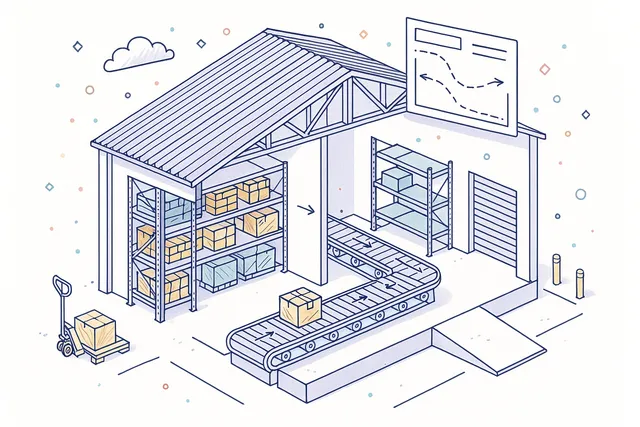
Transfer stock between vessels, from shore to ship, or between any combination of locations with full transfer journals. Ship-to-ship transfers at sea, planned shore-to-vessel replenishment, and emergency cross-fleet redistribution all follow the same controlled workflow.
Dual-approval ensures both the sending and receiving location authorize the transfer. In-transit tracking provides visibility into materials that have left the source but haven't yet arrived at the destination — eliminating the "inventory black hole" that plagues manual processes.
- Ship-to-ship transfers
- Shore-to-ship logistics
- Dual-approval enforcement
- In-transit status tracking

Ownership Transfer Management
Handle changes in material ownership between legal entities without physical movement. Ownership transfer journals record the legal handover — from management company to vessel owner, between co-owners, or for consignment stock transitions — while the material stays exactly where it is.
Each transfer captures the outgoing and incoming owner with full documentation references, maintaining the complete chain of custody for financial reporting and regulatory compliance.
- Legal entity ownership changes
- Consignment stock support
- No physical movement required
- Complete transfer audit trail

Stock Coverage Planning
Set minimum, maximum, and optimal stock levels for every material at every location independently. A tanker and a bulk carrier can have completely different coverage targets for the same spare part, reflecting their unique operational profiles.
The Coverage Analysis view highlights gaps instantly with visual indicators — red for below minimum, amber for below optimal, green for within range. Fleet-wide coverage reports help your supply chain team prioritize replenishment across the entire fleet, not just one vessel at a time.
- Min/max/optimal per material
- Per-location thresholds
- Visual gap indicators
- Coverage-driven requisitions

Expiry Monitoring & Lifecycle
Track batch-level manufacturing dates, shelf life periods, best-before dates, and expiry windows across your entire fleet. Configurable warning windows alert your team before materials expire — giving you time to use, redistribute, or replace them.
The fleet-wide Expiry Monitoring view aggregates expiring stock across all vessels and warehouses, sorted by urgency. No more discovering expired fire extinguisher charges or outdated medical supplies during a port state inspection.
- Batch expiry date tracking
- Configurable warning windows
- Fleet-wide expiry dashboard
- Proactive replacement alerts

Reason-Based Analytics
Every adjustment, correction, and variance feeds into reason-based analytics dashboards. Distribution charts show which reason codes drive the most stock changes, and offset analysis tracks trends over time — is damage increasing? Are measurement errors declining after your new procedures?
Filter by location, material group, time period, or reason category to drill into specific patterns. Turn reactive stock corrections into proactive process improvement by identifying and addressing root causes.
- Distribution charts by reason
- Offset analysis over time
- Filterable summary reports
- Trend identification tools

Journal Line Tracking Details
Every journal line supports master-detail expansion in the grid view, revealing the full tracking breakdown underneath. Click into any arrival, adjustment, or transfer line to see every batch, serial number, and owner assignment associated with that transaction.
Tracking line drill-down provides complete genealogy for any stock movement — from the original goods receipt through every transfer, adjustment, and consumption event. One click from summary to full detail.
- Master-detail grid expansion
- Tracking line drill-down
- Inline batch/serial details
- Full line-level audit info

Inventory Status Management
Classify stock beyond simple quantity with configurable inventory statuses — Unrestricted, Quality Hold, Blocked, In Inspection, Reserved, and any custom status your operation requires. Status acts as a tracking dimension, so the same material at the same location can exist in multiple states simultaneously.
Status transitions follow controlled workflows: material arriving from a supplier might enter "In Inspection" before being released to "Unrestricted." Blocked stock is excluded from availability calculations, ensuring your team never promises material that isn't ready to use.
- Unrestricted, Hold, Blocked statuses
- Custom status definitions
- Status as tracking dimension
- Status-based availability rules

Configurable Dashboards & KPIs
Build custom dashboards with widgets tailored to your inventory management priorities. Monitor stock coverage health, adjustment trends, transfer volumes, expiry alerts, and journal processing times from a single screen.
Share dashboard configurations across your team so everyone — from the Fleet Superintendent to the Warehouse Manager — sees the KPIs that matter to their role. Real-time metrics update as transactions are posted, not on a nightly batch.
- Per-role widget layouts
- Real-time metric cards
- Customizable dashboard grids
- Drill-down from KPI to detail

Complete Audit Trail & Event History
Every transaction, approval decision, status change, and data modification is recorded in an immutable event log with full attribution — who did what, when, and why. From journal creation through approval chain to final posting, the complete lifecycle is traceable.
Built for regulated maritime operations where audit readiness is not optional. ISM Code, ISO 9001, TMSA, and class society auditors will find a clean, chronological, tamper-evident record of every inventory event across your fleet.
- Immutable event log
- Full user attribution
- ISM/ISO/TMSA compliance
- Exportable audit reports

FAQ
Frequently Asked Questions
Common questions about Inventory answered.
What types of inventory transactions does the module support?+
Navatom Inventory supports seven specialized journal types: Adjustment (stock corrections with reason codes), Arrival (goods receipt against purchase orders), Counting (physical inventory with variance analysis), Movement (within-location space changes), Internal Transfer (between-location moves within the same entity), Transfer (inter-vessel and shore-to-ship movements), and Ownership Transfer (legal entity changes without physical movement).
Can I set different stock levels for the same material on different vessels?+
Yes. The Coverage feature lets you configure independent minimum, optimal, and maximum stock levels for every material at every location.
A tanker and a bulk carrier can have completely different coverage targets for the same spare part, reflecting their unique operational profiles and trade routes.
How does the approval system work?+
Every journal type supports configurable multi-tier approval rules evaluated at each workflow transition (Draft → Submitted → Approved → Posted). Rules can be based on transaction value, quantity, material type, location, or any combination.
The system supports escalation tiers, dual-control authorization for critical operations, and records every approval decision with full attribution.
Does Inventory work offline on vessels?+
Yes. Vessels operate with a full local deployment that processes transactions independently of office connectivity.
All journal types, approvals, and on-hand views work offline. When satellite connectivity is available, changes synchronize automatically with conflict resolution — so work is never lost or duplicated.
How does Inventory integrate with Material and Procurement?+
Inventory shares the material master with the Material module — materials, tracking dimensions, units of measure, and categories are defined once and used everywhere. Arrival journals link directly to Procurement purchase orders for goods receipt.
Coverage analysis data can drive procurement requisitions, creating a closed loop from stock need to purchase to receipt.
Can I track by batch, serial number, and owner simultaneously?+
Yes. Tracking dimensions are independently configurable per material.
You can enable any combination of Batch, Serial Number, Owner, Status, and Space dimensions. The system adapts its data entry forms, grid columns, and validation rules automatically based on each material's configuration.
Glossary
Related Maritime Terms
Key terms and concepts related to Inventory.
Related Modules
Manage material catalogs, specifications, and cross-vessel standardization.
Streamline purchasing workflows from requisition to delivery with supplier integration.
Real-time fleet overview with customizable widgets, KPIs, and operational insights.
Ready to try Inventory?
Start your free trial today and see how Inventory fits into your fleet operations.
Free Trial
No credit card required
30+ Modules
Fully integrated platform
Cloud-Based
No installation needed