What Is the IMO Data Collection System?
The IMO Data Collection System for fuel oil consumption of ships was established through Resolution MEPC.278(70) and codified in MARPOL Annex VI Regulation 22A. It represents the first step in the International Maritime Organization's three-phase strategy for addressing greenhouse gas emissions from international shipping: data collection, data analysis, and evidence-based decision-making.
The system has been operational since January 1, 2019, and applies to all ships of 5,000 gross tonnage and above engaged on international voyages, regardless of flag.
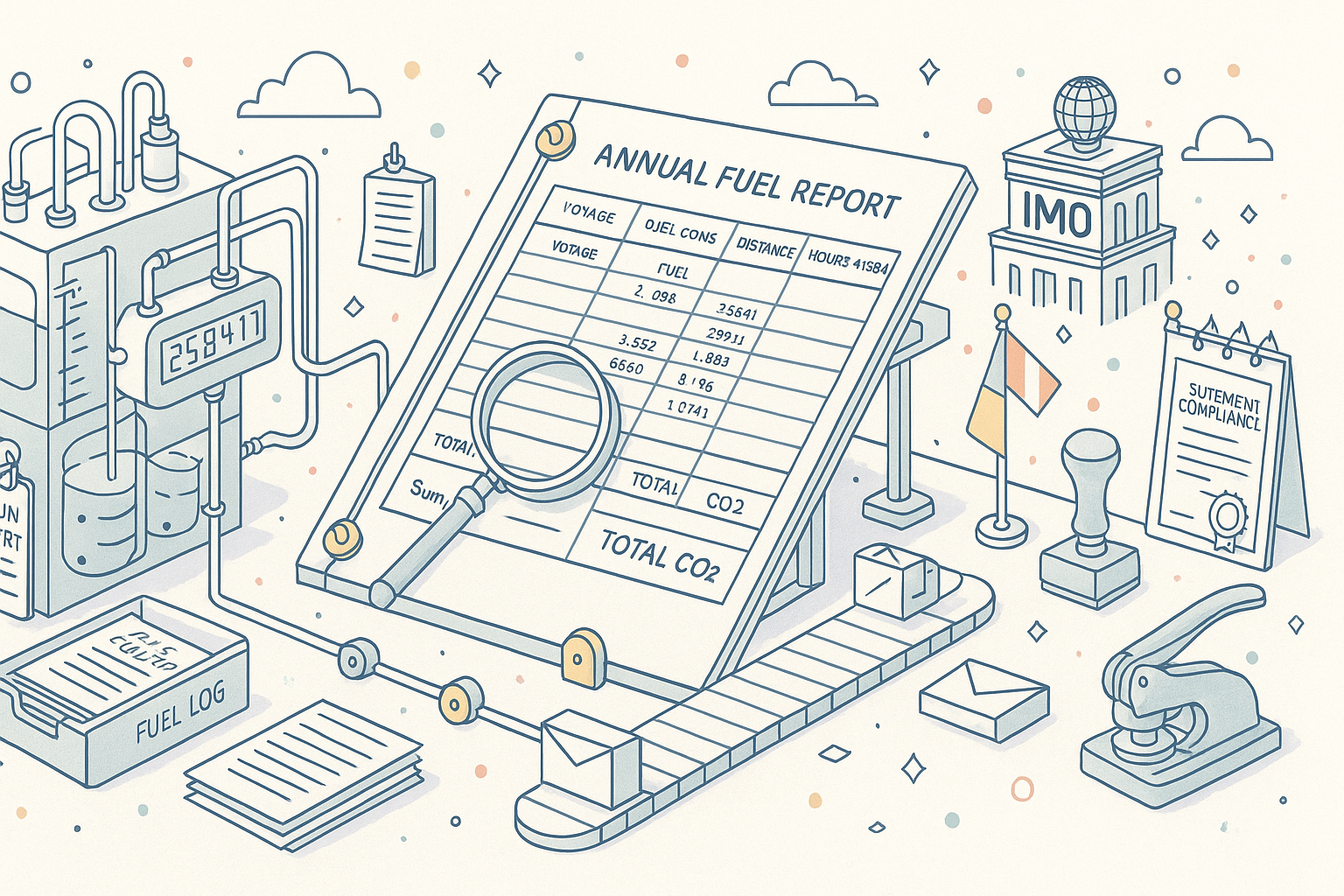
Under the IMO DCS, ships must collect data on their annual fuel oil consumption by type, total hours underway, and total distance travelled. This data is reported to the ship's flag state administration, which verifies the information and issues a Statement of Compliance.
The flag state then transfers the anonymized, aggregated data to the IMO's Global Integrated Shipping Information System (GISIS) database, where it is used to build a comprehensive picture of the global fleet's fuel consumption and emissions patterns.
The creation of the IMO DCS was driven by the recognition that effective emissions regulation requires a robust data foundation. Before the DCS, there was no standardized global mechanism for collecting fuel consumption data from the world's merchant fleet.
The data now flowing into the GISIS database has already informed the development of the CII and EEXI frameworks, and it continues to support the IMO's ongoing work on market-based measures and lifecycle carbon assessments for marine fuels.
Data Points and Reporting Process
The IMO DCS requires ships to collect three categories of data throughout each calendar year. First, total fuel oil consumption must be recorded and broken down by fuel type — typically heavy fuel oil (HFO), very low sulphur fuel oil (VLSFO), marine diesel oil (MDO), marine gas oil (MGO), and liquefied natural gas (LNG).
Second, total hours underway must be tracked, measuring the time the ship spends in transit between ports. Third, total distance travelled must be recorded in nautical miles.
These three dimensions together enable the calculation of fuel efficiency metrics and carbon intensity indicators.
Each ship must carry a Ship Fuel Oil Consumption Database Plan that describes its methodology for collecting and recording the required data. The plan must be approved by the flag state or a recognized organization and kept on board for inspection.
At the end of each calendar year, the collected data is compiled into a report and submitted to the flag state within a prescribed timeframe. The flag state reviews the submission, and if satisfied, issues a Statement of Compliance that must be carried on board along with the previous year's statement.
The reporting process is designed to be straightforward, but the quality of the underlying data depends entirely on consistent, disciplined collection throughout the year. Gaps in noon reporting, inaccurate bunker delivery records, or inconsistent distance logging can compromise the integrity of the annual report.
Automated data collection platforms like Navatom address this challenge by capturing the required data points as a natural byproduct of daily operational workflows, ensuring that the DCS report is based on complete and accurate records.
IMO DCS vs EU MRV
The IMO DCS and the EU MRV regulation are often compared because they both collect fuel consumption and emissions data from ships. However, they differ in several important respects.
The IMO DCS is global in scope and applies to all ships on international voyages, while the EU MRV is regional and applies specifically to ships calling at EU/EEA ports. The IMO DCS collects aggregated annual data, while the EU MRV requires data at the per-voyage level.
The EU MRV also requires reporting of cargo carried and transport work, data points that the IMO DCS does not mandate.
The verification mechanisms also differ. Under the EU MRV, an accredited verifier — an independent third party — must assess the annual emissions report before the ship receives its document of compliance.
Under the IMO DCS, verification is performed by the flag state administration or a recognized organization acting on the flag state's behalf. The EU MRV verification process is generally considered more rigorous, as the accredited verifier must assess data quality, methodology adherence, and the monitoring plan itself.
For ship operators trading in European waters, compliance with both frameworks is required. The underlying fuel consumption and voyage data is largely the same, but the reporting format, granularity, and submission process differ.
Managing both obligations through a single platform eliminates the risk of inconsistencies between DCS and MRV reports. The data from both systems also feeds into the CII rating system, which uses fuel consumption and distance data to calculate each vessel's operational carbon intensity.
How Navatom Automates IMO DCS Reporting
Navatom integrates IMO DCS reporting into the daily operational workflows that ships already follow. Fuel consumption is captured through the Consumption and Waste module from bunker delivery notes and daily noon reports.
Hours underway and distance travelled are derived from the Voyage module's position reporting and voyage log records. Because this data is collected as part of normal ship operations, there is no additional workload on the crew for DCS compliance — the report is assembled automatically from the data that already exists in the system.
Throughout the year, Navatom validates data quality by checking for gaps in reporting, unusual consumption figures, and inconsistencies between fuel records and voyage records. Alerts notify shore-based managers when data quality issues are detected, allowing them to be resolved promptly rather than discovered at the end of the year during report compilation.
This continuous validation process significantly reduces the risk of flag state queries or requests for clarification.
When the calendar year ends, Navatom aggregates all collected data into the annual DCS report format required by the flag state or recognized organization. The Certificates module tracks the status of each vessel's Statement of Compliance, including issuance dates, expiry dates, and renewal reminders.
For companies that also report under the EU MRV, the same underlying data serves both reports, with Navatom handling the different aggregation levels, data fields, and submission formats automatically.