Benefits
Why Vettings?
Key advantages of Vettings as part of Navatom's integrated platform.
Every Vetting Inspection Tracked from Arrival to Completion
From the moment an inspector boards to the final finding closeout, every step is documented. No more lost inspection notes, forgotten findings, or untracked corrective actions. The complete inspection lifecycle is captured in one place.
Findings That Drive Corrective Action, Not Just Reports
Vetting findings are not buried in PDF reports — they convert directly into tracked deficiencies with assigned responsibility, due dates, and verification requirements. Every observation reaches a documented resolution.
Fleet-Wide Vetting Intelligence
Dashboard widgets and analytics aggregate finding trends, completion rates, and compliance status across your entire fleet. Spot systemic issues before they become detention risks, and demonstrate continuous improvement to charterers and terminals.
Inspection-Ready Records for Every Port Call
Immutable event logs, structured findings, and complete documentation mean your vetting records are always ready for review. When a charterer or terminal asks for your inspection history, the answer is one click away.
Scales from Single Vessel to Global Fleet
The system performs identically whether you manage one vessel or five hundred. Grow your fleet without outgrowing your vetting management platform. Office-ship synchronization ensures consistent performance across all vessels.
Navatom Vettings is the dedicated vetting inspection management platform for tanker, bulk carrier, and gas carrier operators — purpose-built for the structured inspections that charterers, terminals, and oil majors require before loading or discharging cargo. It replaces ad-hoc inspection tracking with a controlled, cloud-synchronized system that gives your DPA, fleet superintendent, and vessel masters a single source of truth for every vetting inspection.
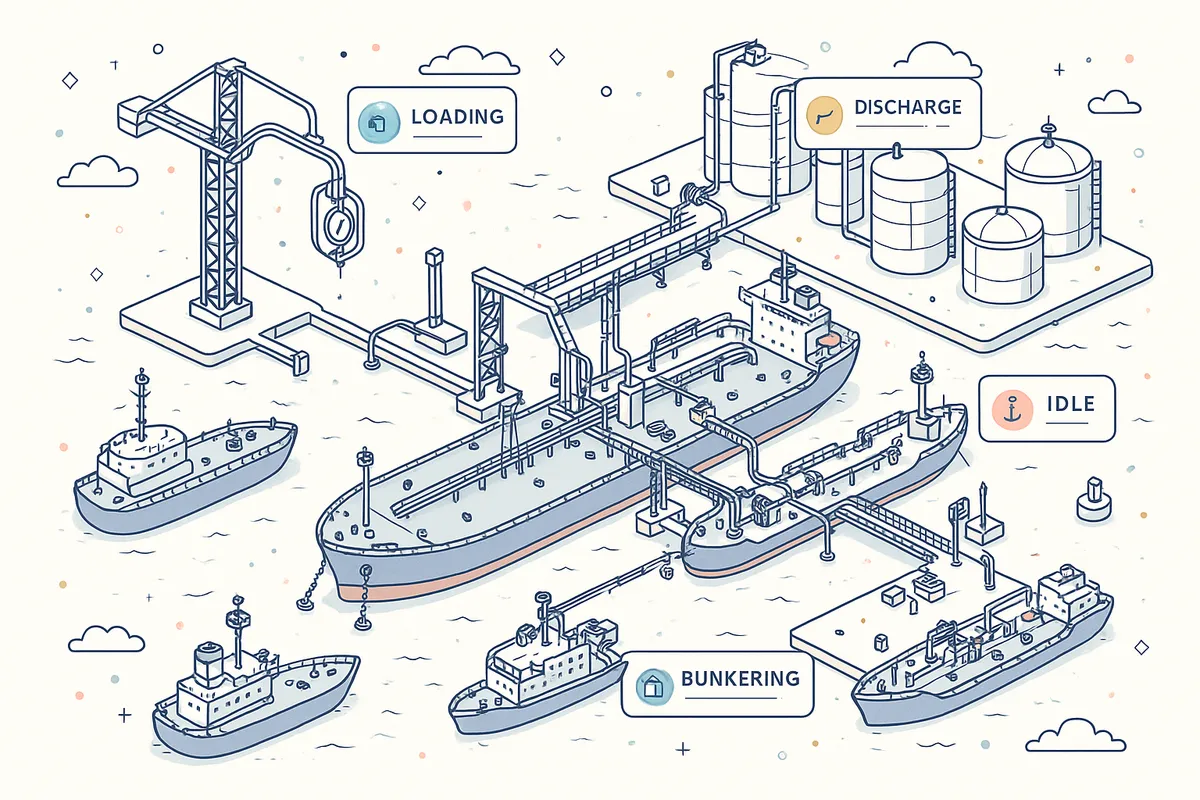
Built around five operational contexts — Loading, Discharge, Idle, Bunkering, and Ship-to-Ship Transfer — the module adapts to any inspection scenario. Record findings with regulatory references, classify them by priority and severity, and convert them into formal deficiency records when corrective action is required.
Company representatives, ship crew, and third-party inspectors are tracked as distinct stakeholder groups with separate management and assignment.
Every change to a vetting record is captured in an immutable event log with 20 auditable event types — from vetting creation and finding documentation through status transitions and auditor changes. Office-ship synchronization ensures inspections run identically whether your vessel is alongside or at anchor, and fleet-wide analytics reveal compliance trends across your entire operation.
Capabilities
Key Features
How Vettings helps ship managers work faster and stay compliant.
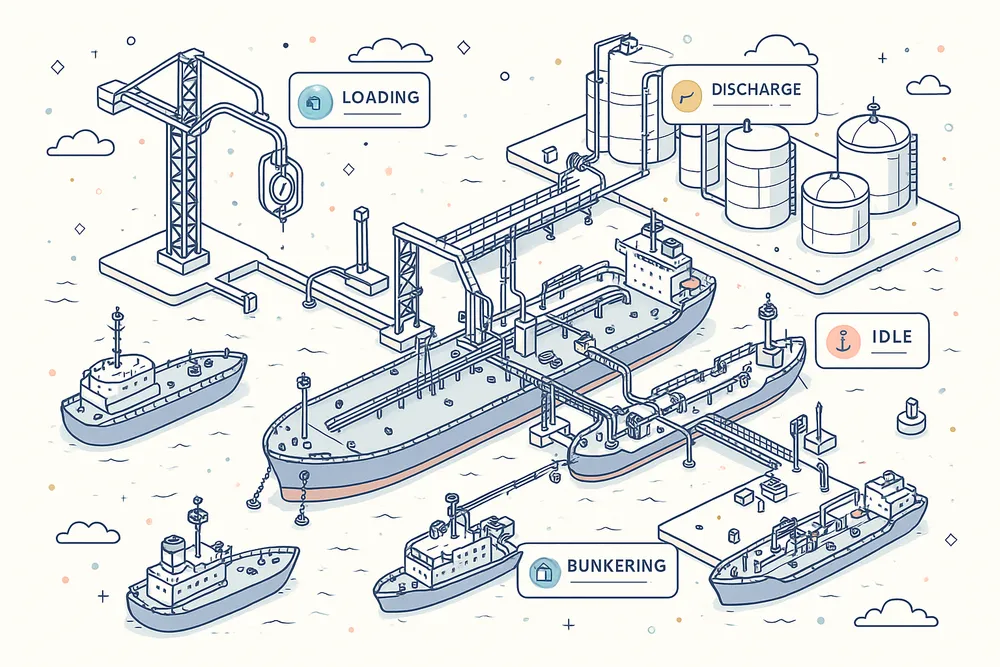
Five Operational Contexts
Every vetting inspection takes place during a specific operational phase. Navatom supports five operational contexts — Loading, Discharge, Idle, Bunkering, and Ship-to-Ship Transfer (STS) — each representing a distinct scenario with different risk profiles, regulatory requirements, and inspection focus areas.
Select the operational context when creating a vetting, and the record captures the precise circumstances under which the inspection occurred. This contextual data feeds into analytics, letting you compare finding patterns across different operations and identify which activities generate the most observations.
Vetting Finding Documentation
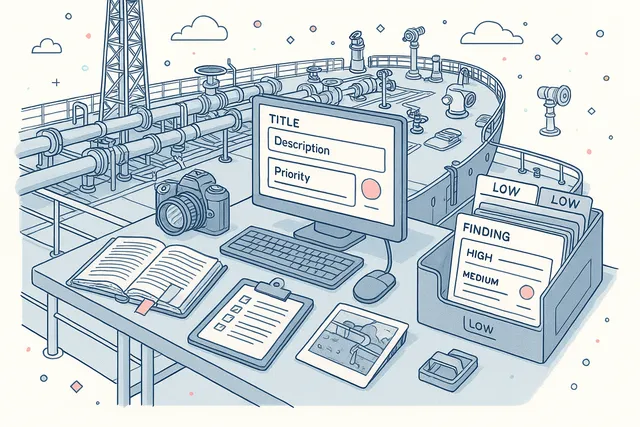
Document every observation with the structure and detail that follow-up demands. Each finding records a title, detailed description, the inspector who identified it, priority and severity ratings, and links to applicable regulatory standards. Attach photographs, supporting documents, and evidence files directly to the finding record.
Findings are not disposable notes — they are formal records that drive your corrective action process. The structured format ensures consistent documentation quality across different inspectors, vessels, and inspection types, making trend analysis and fleet-wide comparison meaningful.
- Structured finding records
- Priority & severity classification
- Inspector identification tracking
- Regulatory standard references
Finding-to-Deficiency Conversion
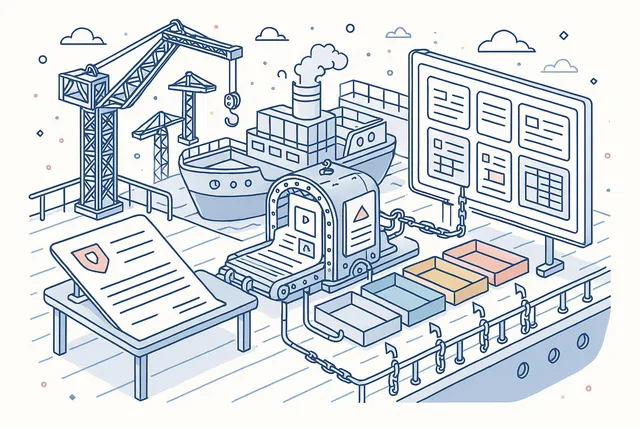
When a vetting finding requires formal corrective action, convert it to one of seven deficiency types — Major Non-Conformity, Non-Conformity, Observation, Deficiency, Technical Finding, Near Miss, or Accident. The conversion carries forward all evidence, regulatory references, severity data, and inspection context automatically.
The link between the original finding and the resulting deficiency is permanent. Trace any corrective action back to the specific inspection observation that triggered it.
Bulk conversion handles multiple findings simultaneously when an inspection generates several actionable items.
- Seven deficiency type options
- Full evidence carry-forward
- Permanent finding-deficiency linkage
- Bulk conversion support
Third-Party Inspector Management
Manage the external inspectors who conduct vetting assessments against your vessels. Add third-party inspectors with full contact details — name, organization, and role — and assign them to specific vetting records. The system maintains a contact registry that grows with every inspection.
When a new inspector arrives, create their record on the spot or select from previously registered contacts. Inspector history tracks which vettings each external party has conducted, building an institutional memory of your inspection relationships.
- Contact registry for inspectors
- On-the-spot inspector registration
- Inspector history tracking
- Organization & role recording
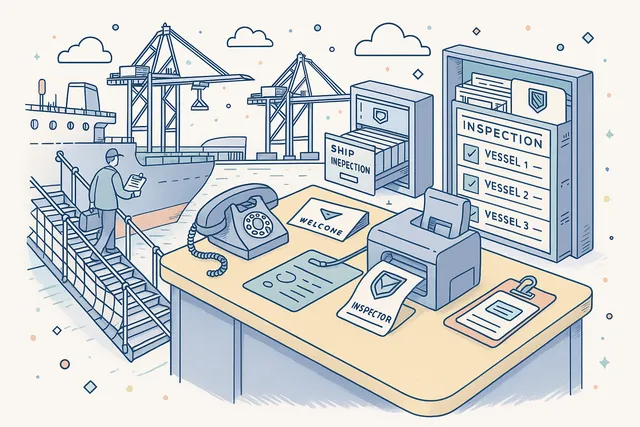
Company & Ship Representative Tracking
Assign company office staff and vessel crew as representatives for each vetting inspection. Company representatives typically include the designated superintendent or operations coordinator, while ship representatives include the master, chief officer, and relevant department heads.
Clear representative assignment ensures accountability — everyone involved in the inspection is recorded and can be contacted for follow-up. The system draws from your crew database, so representative selection is fast and accurate.
- Company office staff assignment
- Vessel crew representative selection
- Crew database integration
- Accountability recording

Regulatory Rule Linking
Link vetting findings to the applicable regulatory standards — ISM Code, SOLAS, MARPOL, and MLC — with structured references to specific code sections, chapters, and regulations. Regulatory linking transforms findings from isolated observations into compliance-relevant records.
When you link a finding to a specific SOLAS regulation or ISM Code requirement, you create a traceable connection between the inspection observation and the regulatory obligation. This structured approach enables fleet-wide regulatory gap analysis: which standards generate the most findings? Which regulations are your vessels struggling with?
- ISM Code clause references
- SOLAS & MARPOL linking
- MLC compliance tracking
- Fleet-wide regulatory gap analysis

Priority & Severity Classification
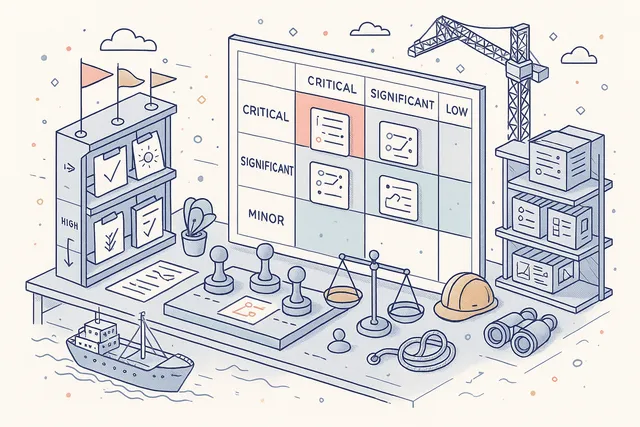
Rate every finding by priority and severity to ensure the most critical issues receive immediate attention. Priority determines the urgency of response — how quickly must this be addressed? Severity classifies the potential impact — how serious is the underlying condition?
Classification drives follow-up workflows. High-priority, high-severity findings trigger immediate corrective action requirements, while lower-rated observations may be monitored for trends over time. Consistent classification across your fleet enables meaningful comparison and benchmarking.
- Urgency-based priority ratings
- Impact-based severity ratings
- Classification-driven follow-up
- Fleet benchmarking support
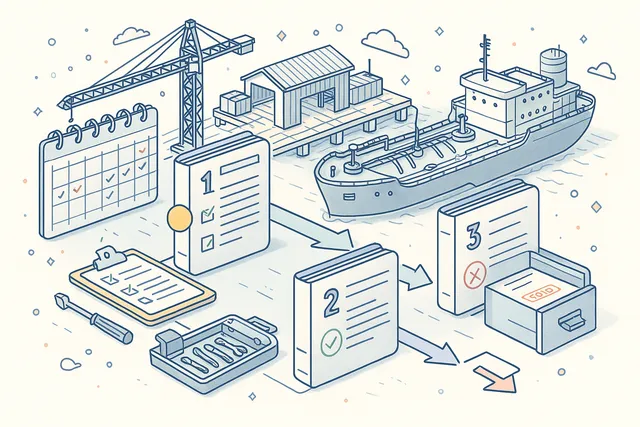
Vetting Lifecycle Management
Every vetting inspection follows a controlled lifecycle from creation through completion. The Ongoing, Completed, and Invalid status model provides clear visibility into where each inspection stands. Completed vettings lock their finding records, preserving them as-is for regulatory review.
Invalid status handles cancelled or superseded inspections without deleting the record. Status transitions enforce data completeness — you cannot mark a vetting as completed without addressing its findings. The lifecycle ensures no inspection slips through without proper follow-up.
- Ongoing to Completed workflow
- Invalid status for cancellations
- Status-enforced data locking
- Complete lifecycle tracking
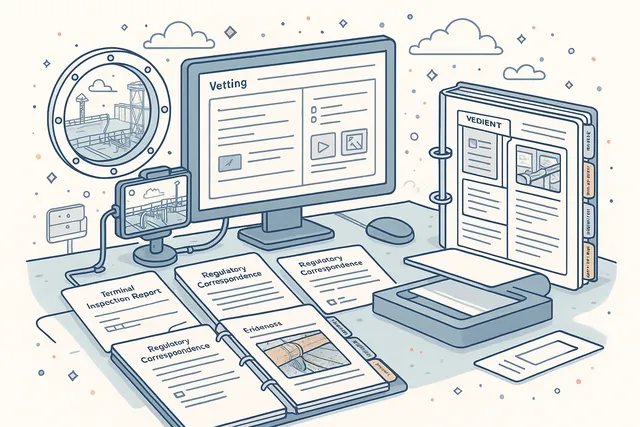
Rich Descriptions & File Attachments
Attach photographs, inspection reports, regulatory correspondence, and supporting documents directly to vetting records and individual findings. Every file is stored with the record it belongs to, creating a self-contained inspection package.
Upload evidence photographs from the deck, engine room, or cargo area. Attach terminal inspection reports, charterer correspondence, and deficiency response documentation.
The file management system handles versioning — update, replace, or remove attachments with a full change history.
- Photo & document attachments
- Per-finding evidence files
- File versioning & history
- Inspection report uploads
Threaded Comments & Collaboration
Discuss vetting findings and corrective actions in threaded comment conversations attached directly to the inspection record. Ship crew, shore superintendents, and fleet managers can exchange observations, clarify findings, and coordinate responses without leaving the system.
Comments create a chronological discussion record that travels with the vetting — no more searching through email chains for context. Edit or remove comments as needed, with every change tracked in the audit trail.
- Ship-shore discussion threads
- Comment edit & delete tracking
- Chronological discussion record
- Context attached to inspection

Complete Audit Trail
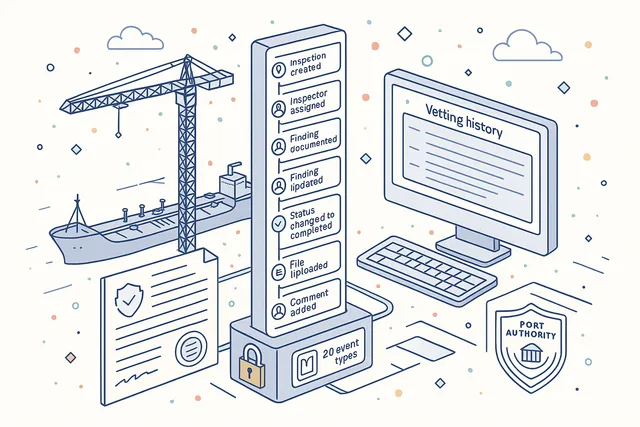
Every action within a vetting is recorded in an immutable event log with 20 event types — from creation and finding documentation through status changes, auditor assignments, and file uploads. Each event carries the full identity of who made the change and when.
The audit trail is not just a log — it is your evidence of due diligence. When a charterer, terminal, or port state inspector asks for the history of a specific vetting, the event stream reconstructs exactly what happened, who was involved, and what actions were taken.
- 20 tracked event types
- Full user attribution per event
- Tamper-proof event logging
- Due diligence evidence
Analytics & Dashboard
Monitor your vetting performance with dedicated analytics and dashboard widgets. Track ongoing inspection counts, finding trends by regulatory standard, completion rates across the fleet, and overdue corrective actions — all from a single overview.
Regulatory book-based analytics show which compliance standards generate the most findings across your fleet. Identify systemic issues before they become detention risks, and allocate resources where they will have the greatest impact on your vetting readiness.
- Ongoing inspection counts
- Finding trends by standard
- Fleet-wide completion rates
- Overdue corrective action alerts

FAQ
Frequently Asked Questions
Common questions about Vettings answered.
What operational contexts does the vetting module support?+
Five operational contexts: Loading, Discharge, Idle, Bunkering, and Ship-to-Ship Transfer (STS). Each context represents a distinct inspection scenario with different risk profiles and regulatory focus areas.
The operational context is recorded with every vetting for trend analysis.
How are vetting findings different from audit findings?+
Vetting findings are generated during external commercial inspections (SIRE, CDI, terminal vettings), while audit findings come from internal or external compliance audits. Both follow the same structured format with priority, severity, and regulatory references, and both can be converted to deficiencies for corrective action tracking.
Can I manage third-party inspectors in the system?+
Yes. Third-party inspectors are managed with full contact details in a growing registry.
Add new inspectors on the spot or select from previously registered contacts. Inspector history tracks which vettings each external party has conducted across your fleet.
How does finding-to-deficiency conversion work?+
Select one or more findings and convert them to any of seven deficiency types — Major Non-Conformity, Non-Conformity, Observation, Deficiency, Technical Finding, Near Miss, or Accident. All evidence, regulatory references, and severity data carry forward automatically.
The link between finding and deficiency is permanent.
Does the module work offline on vessels?+
Yes. Vessels operate with a full local installation that processes inspections, findings, and documentation independently of office connectivity.
All vetting operations work offline. When satellite connectivity is available, changes synchronize automatically with the office system.
What analytics are available for vetting inspections?+
The module includes dedicated dashboard widgets and analytics covering ongoing inspection counts, finding trends by regulatory standard, fleet-wide completion rates, and overdue corrective actions. Book-based analytics show which compliance standards generate the most findings across your fleet.
Related Modules
Plan and conduct internal and external audits with finding management and follow-up.
Centralize findings from all assessment activities with unified corrective action tracking.
Collect structured evaluations and feedback for continuous improvement.
Ready to try Vettings?
Start your free trial today and see how Vettings fits into your fleet operations.
Free Trial
No credit card required
30+ Modules
Fully integrated platform
Cloud-Based
No installation needed