
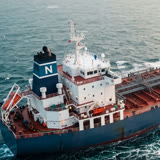
 MT BANE OF ISILDUR
LOG
Logbooks
The ship's electronic logbook: log each event once, and it lands in every record book it belongs to.
Operations modules digitize the day-to-day running of your vessels. From drydock planning and consumption tracking to waste management, these tools replace manual processes with cloud-synchronized workflows that keep shore and ship aligned. Explore all 3 modules below.
23
Fuel & Lubricant Types
Consumption & Waste
10
Tracking Categories
Consumption & Waste
13
Record Books
Logbooks
3
Emissions Datasets
Voyage
Operation modules hold the records a vessel keeps every day. Logbooks is the ship's electronic logbook: an event is logged once and lands in every record book it belongs to.
Voyage records each voyage from departure to arrival and reports its emissions for EU MRV, IMO DCS and CII. Consumption & Waste is where officers record fuel, lubricant, water and waste, with the CO2 worked out from every fuel entry.
Logbooks holds 13 record books with 250+ entry types, from the deck and engine logs to the Oil Record Book Parts I and II, the Garbage, Sewage and Ballast Water record books and the GMDSS log. An event is logged once and lands in every book it belongs to: a fuel changeover, for example, goes into both the Deck Log and the Engine Log. Each logbook day is signed on board, the office reviews it with comments and attachments, and each vessel sets which ranks can write in the logbook and which can sign it. A voyage can be started and ended from the logbook, each voyage keeps the cargo it carried and its EU MRV figures, and the office sees each ship's latest logged position on a fleet map.
The ship's electronic logbook: log each event once, and it lands in every record book it belongs to.
Monitor fuel consumption, waste management, and environmental compliance across the fleet.
Record every voyage from departure to arrival, and report its emissions for EU MRV, IMO DCS and CII.
All Operation modules share data seamlessly with every other module in the Navatom platform. Data entered in one module is immediately available across your entire fleet management system — no duplication, no manual transfers, no delays.
This integrated architecture means your operation workflows connect directly to maintenance schedules, crew records, procurement orders, and compliance documentation — giving your team a single source of truth for every operational decision.
FAQ
Yes. Logbooks keeps working on board without a connection and sends the changes when the ship is back online; only signing a logbook day waits for the connection.
23 fuel and lubricant types, from MGO, HFO and LNG to methanol and 12 lubricant grades, in 10 categories that also cover fresh and technical water, sludge, bilge and garbage.
Voyage builds its emissions figures from the fuel consumption logged on board, and reports them per voyage for EU MRV and as annual datasets for IMO DCS and CII.
As one of 5 transaction types: operational use, loss, addition, offboard or waste, in metric tonnes, cubic metres, litres, kilograms or gallons.
Start your free trial and explore all Operation modules.
Discover more modules across the Navatom platform.