Benefits
Why Non-Conformities?
Key advantages of Non-Conformities as part of Navatom's integrated platform.
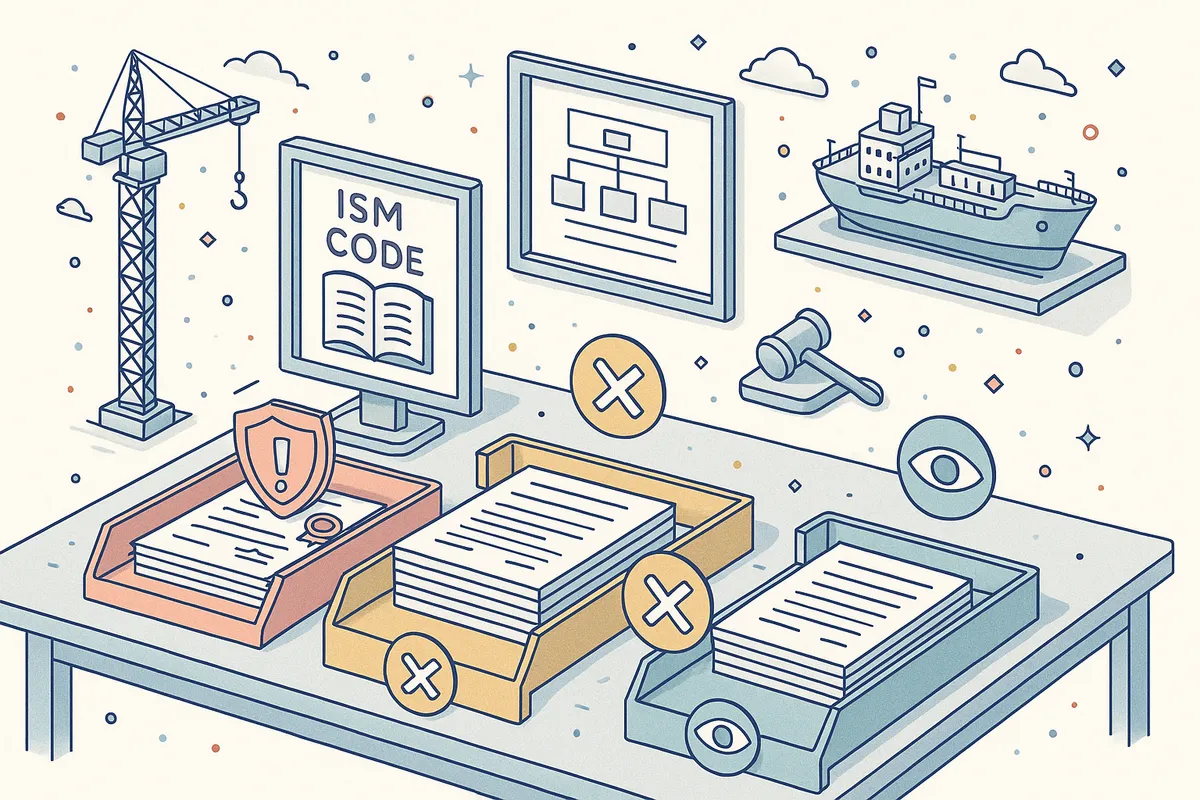
ISM-Compliant Non-Conformity Management
Three severity classes, structured root cause analysis, and verified corrective actions align directly with ISM Code requirements. Your management system demonstrates compliance through documented process, not just documented results.
Three Severity Levels for Precise Classification
Major Non-Conformity, Non-Conformity, and Observation — each with its own response requirements and escalation rules. Your team responds proportionately to each finding, dedicating management attention where it matters most.
From Audit Finding to Corrective Action in One Step
Audit and vetting findings convert directly into tracked non-conformities, carrying forward all evidence and context. No data re-entry, no lost information, and a permanent link for full traceability.
Fleet-Wide Compliance Visibility
Dashboards aggregate non-conformity data across your entire fleet, revealing patterns by severity class, regulatory framework, and vessel. Spot systemic compliance gaps before they become audit findings.
Regulatory-Ready Records for Every Inspection
Forty-four event types create a complete, tamper-proof record of every action on every non-conformity. Port state, flag state, classification society, and ISM auditors find clean, chronological compliance evidence.
Proactive Compliance Culture
Root cause analysis, preventive actions, and fleet-wide trend data transform reactive non-conformity management into proactive compliance improvement. Address system weaknesses before they generate repeat findings.
Navatom Non-Conformities is the compliance engine for managing ISM and ISPS non-conformities across your fleet. Purpose-built for the regulatory demands of maritime safety management, it gives your DPA, compliance officers, and vessel masters a structured system for documenting, investigating, and resolving every non-conformity — from major findings that require immediate management review to observations that feed your continuous improvement program.
The module classifies every non-conformity into one of three severity classes — Major Non-Conformity (MNC), Non-Conformity (NC), and Observation (OBS) — each with its own response requirements, escalation rules, and closure verification. Alignment with four regulatory frameworks — ISM Code, ISPS Code, SOLAS, and MARPOL — ensures that every finding carries the right regulatory context for inspection readiness.
Audit and vetting findings convert directly into tracked non-conformities, carrying forward all evidence and observations. Rules-based root cause analysis, three corrective action types, and a six-stage compliance lifecycle ensure that every non-conformity is investigated thoroughly and resolved permanently.
Fleet-wide dashboards and a complete audit trail with forty-four event types transform reactive compliance into proactive safety management.
Capabilities
Key Features
How Non-Conformities helps ship managers work faster and stay compliant.
Three Non-Conformity Classes
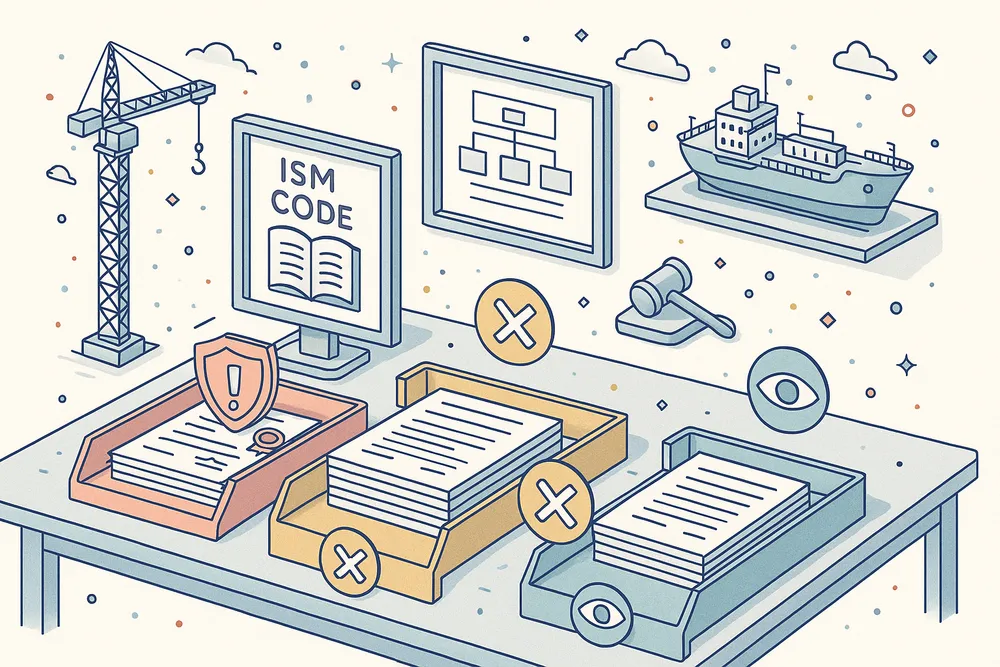
Classify every non-conformity into one of three severity classes: Major Non-Conformity (MNC), Non-Conformity (NC), and Observation (OBS). Each class carries specific response requirements — a Major Non-Conformity demands immediate corrective action and management review, while an Observation may require only monitoring and trend analysis.
The three-class system aligns directly with ISM Code audit frameworks and classification society expectations. Your compliance team always knows the urgency level, and external auditors immediately understand the severity of each finding in your system.
ISM & ISPS Regulatory Alignment
Every non-conformity is linked to the applicable regulatory framework — ISM Code, ISPS Code, SOLAS, or MARPOL. This structured alignment ensures that your compliance records carry the regulatory context that inspectors and auditors expect to see.
Regulatory alignment is not just a label — it drives the response process. An ISM-related non-conformity follows ISM investigation and corrective action procedures.
An ISPS-related finding triggers security-specific review workflows. The system adapts to the regulatory domain of each non-conformity.
- ISM Code framework integration
- ISPS Code compliance support
- SOLAS & MARPOL references
- Regulatory-driven response workflows

Audit & Vetting Finding Conversion
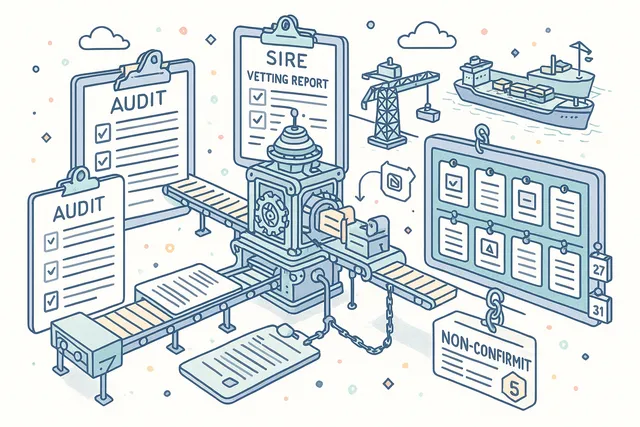
Convert audit findings and vetting observations directly into tracked non-conformities with a single action. The conversion carries forward all evidence, observations, severity classification, and regulatory references from the original finding.
Whether the source is an internal ISM audit, a port state control inspection, a SIRE vetting, or a classification society survey, the finding enters your non-conformity workflow with full context. No duplicate data entry, no lost information, and a permanent link back to the source assessment.
- One-action finding conversion
- ISM audit finding import
- SIRE vetting observation import
- Permanent source-finding linkage
Rules-Based Root Cause Analysis
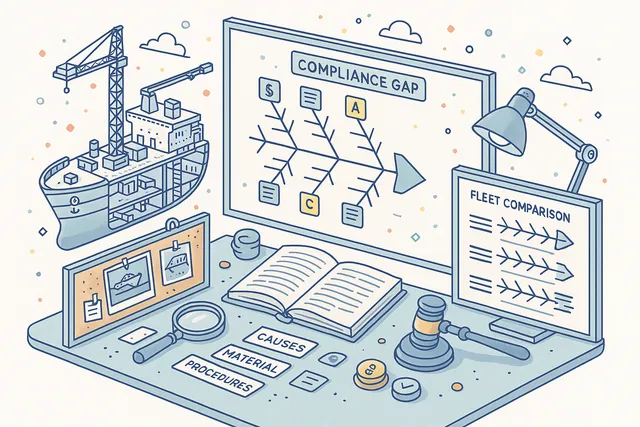
Investigate the underlying cause of every non-conformity using predefined root cause categories designed for maritime compliance. The rules-based approach ensures consistent, comparable analysis across all vessels and all non-conformity types.
Root cause data aggregates across your fleet, revealing systemic compliance gaps that individual vessel investigations would miss. When the same root cause appears across multiple vessels, your management system needs attention — and the data makes that visible.
- Predefined root cause categories
- Consistent cross-vessel analysis
- Fleet-wide pattern detection
- Systemic compliance gap identification
Interim, Corrective & Preventive Actions
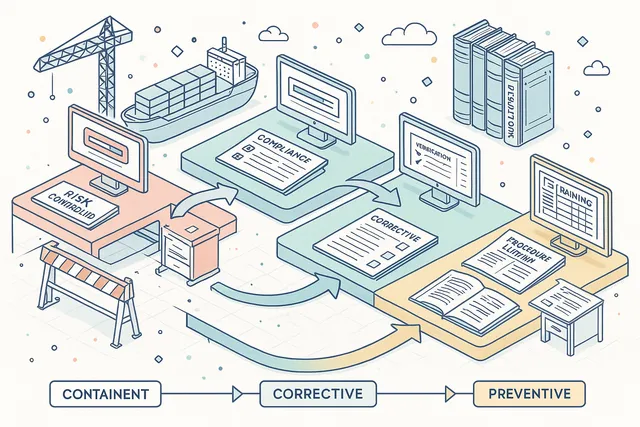
Address non-conformities at three levels: interim actions contain the immediate compliance risk, corrective actions resolve the specific non-conformity, and preventive actions update your management system to prevent recurrence. Each action type is tracked independently with its own deadlines and verification.
For Major Non-Conformities, all three action types may be required. For Observations, a preventive action alone may suffice.
The system adapts to the severity of each finding, ensuring proportionate response without unnecessary overhead.
- Interim risk containment
- Corrective resolution tracking
- Preventive system updates
- Severity-proportionate response
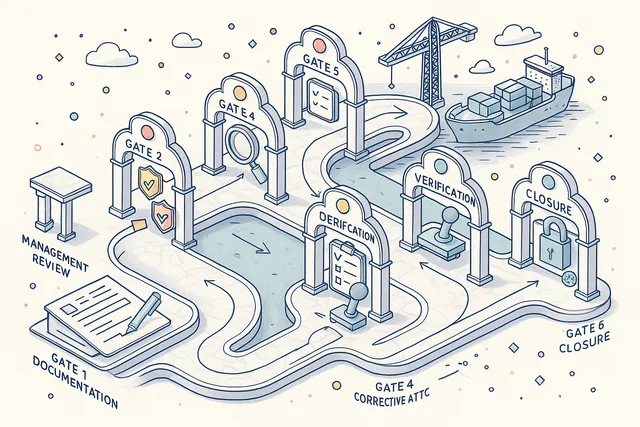
Six-Stage Compliance Lifecycle
Every non-conformity follows a six-stage compliance lifecycle from initial documentation through investigation, corrective action, verification, and closure. Stage transitions enforce data completeness and approval requirements appropriate to the severity class.
The lifecycle ensures that a Major Non-Conformity cannot be closed without management review and verified corrective action, while a routine Observation can progress more efficiently. Clear status visibility at every stage keeps your compliance team aligned.
- Controlled compliance progression
- Severity-based transition rules
- Data completeness enforcement
- MNC management review gate
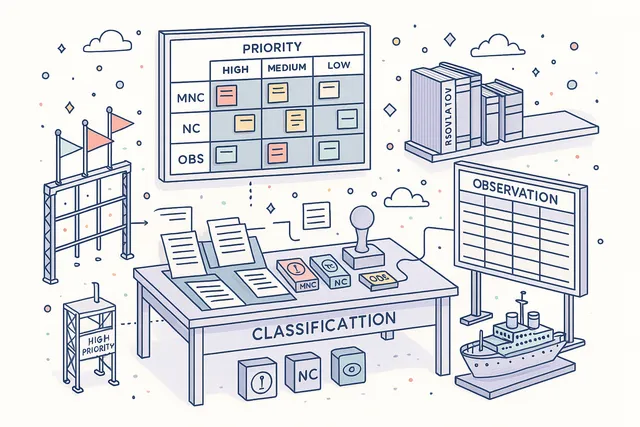
Priority & Severity Classification
Beyond the three non-conformity classes, each finding also carries a priority rating that determines how urgently it must be addressed. The combination of severity class and priority creates a precise urgency matrix for your compliance team.
High-priority Major Non-Conformities rise to the top of every dashboard and notification list. Lower-priority Observations are tracked for trend analysis without creating false urgency. Your team focuses where the compliance risk is greatest.
- Dual priority and severity ratings
- Three-class severity hierarchy
- Dashboard-driven urgency ranking
- Focused compliance attention
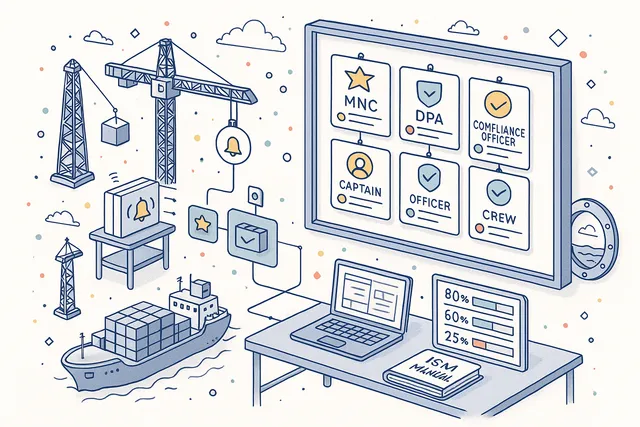
Ship & Office Compliance Tracking
Track non-conformities from both vessel and office environments in a single unified system. Ship-side findings are immediately visible to your DPA and compliance team ashore, ensuring that regulatory issues discovered at sea receive prompt shore-side attention.
The office-ship workflow ensures proper handoff between vessel crews who identify the non-conformity and shore-based compliance officers who oversee the regulatory response. Both sides see the same data, the same status, and the same deadlines.
- Unified vessel and shore visibility
- DPA real-time oversight
- Regulatory handoff workflow
- Consistent status across locations

Crew Assignment & Responsibility
Assign clear responsibility for each non-conformity to specific personnel — whether ship crew, shore-based compliance officers, or management. Each assignment includes the expected actions, deadlines, and evidence requirements.
For Major Non-Conformities that require management review, the assignment chain may extend from the vessel master through the DPA to senior management. The system tracks each level of responsibility and ensures that every required approval is obtained.
- Named compliance responsibility
- Management review assignments
- DPA escalation tracking
- Deadline and scope management
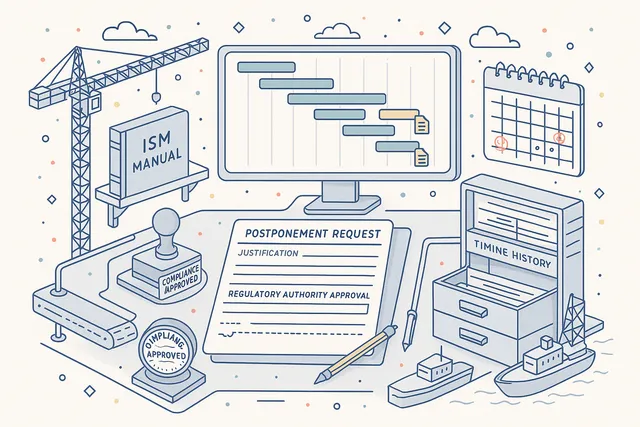
Postponement Management
When a non-conformity cannot be resolved within the original compliance timeline, the postponement process captures the reason, the new target date, and the authorization. Every postponement is documented with full justification for regulatory review.
Postponement history is a critical compliance record. External auditors examine not just the current deadline, but the history of timeline changes and the reasons behind them. The system makes this information transparent and immediately accessible.
- Documented extension justification
- Authorization requirements
- Full postponement history
- Regulatory-ready timeline records
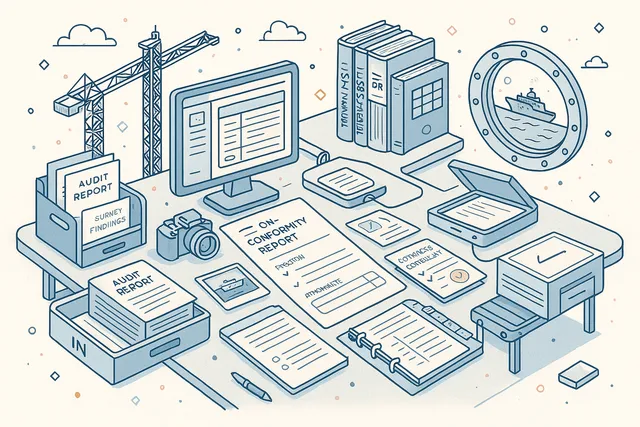
Rich Descriptions & File Attachments
Document every non-conformity with detailed descriptions and supporting evidence. Attach audit reports, photographs, certificates, regulatory correspondence, and any other files that support the investigation and resolution.
Complete documentation is essential for regulatory compliance. When a classification society or flag state auditor reviews your non-conformity records, they expect to see the evidence that supports your investigation findings and corrective actions.
- Detailed compliance documentation
- Audit report attachments
- Certificate and correspondence files
- Complete evidence package
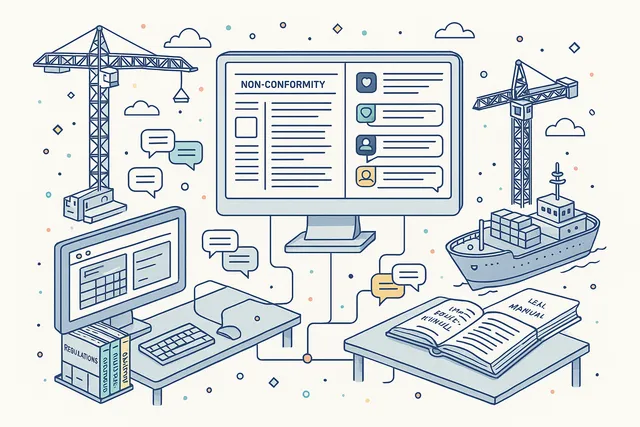
Threaded Comments & Collaboration
Collaborate on non-conformity resolution with threaded comments attached directly to each record. Your DPA, vessel master, compliance officers, and management can discuss the investigation, corrective actions, and regulatory implications in context.
The comment thread becomes part of the permanent compliance record, capturing the decision-making process behind each resolution. This documentary evidence strengthens your position during external audits and regulatory reviews.
- DPA and master collaboration
- Compliance discussion threads
- Decision-making documentation
- Permanent compliance narrative
Complete Audit Trail
Every action on a non-conformity is recorded in a tamper-proof event log with forty-four tracked event types. From initial documentation through severity classification, root cause analysis, corrective action assignments, and closure verification — every step is captured.
The audit trail is your compliance backbone. It provides the evidence that your management system works as intended: non-conformities are investigated, root causes are identified, corrective actions are implemented, and closures are verified by authorized personnel.
- 44 tracked event types
- Full user attribution
- Tamper-proof compliance evidence
- ISM audit-ready records

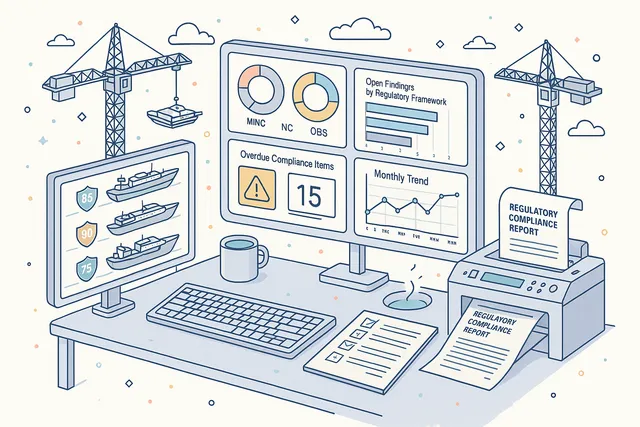
Analytics & Dashboard
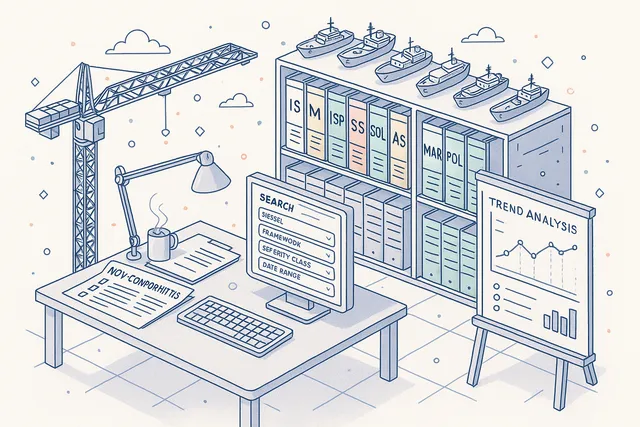
Monitor your compliance program with dashboards that track non-conformity closure rates, open findings by severity class, overdue items, and trend analysis. Fleet-wide views identify vessels or areas with recurring compliance issues.
Analytics turn individual non-conformity records into compliance intelligence. Which severity classes are increasing?
Which regulatory frameworks generate the most findings? Where are corrective actions overdue? The dashboard makes these patterns visible immediately.
- Closure rate by severity class
- Open findings by framework
- Overdue compliance items
- Fleet-wide trend analysis
Fleet-Wide Non-Conformity Archive
Access the complete history of every non-conformity across your entire fleet. Closed non-conformities remain searchable and filterable, building a compliance knowledge base that supports regulatory gap analysis and continuous improvement.
When preparing for an ISM audit or responding to a port state inspection, your compliance team can instantly access the full history of non-conformities for any vessel, any regulatory framework, and any time period.
- Complete compliance history
- Searchable by regulatory framework
- Vessel and time period filtering
- ISM audit preparation support
FAQ
Frequently Asked Questions
Common questions about Non-Conformities answered.
What are the three non-conformity classes?+
Major Non-Conformity (MNC) is the most severe — it indicates a significant failure in the management system that requires immediate corrective action and management review. Non-Conformity (NC) indicates a gap that must be corrected within a defined timeline.
Observation (OBS) captures a potential issue or area for improvement that should be monitored and addressed proactively.
Which regulatory frameworks does the module support?+
The module aligns with four major maritime regulatory frameworks: ISM Code (International Safety Management), ISPS Code (International Ship and Port Facility Security), SOLAS (Safety of Life at Sea), and MARPOL (Marine Pollution Prevention). Each non-conformity is linked to the applicable framework for regulatory traceability.
Can audit and vetting findings be converted into non-conformities?+
Yes. Findings from internal ISM audits, port state control inspections, SIRE vettings, classification society surveys, and any other assessment source can be converted into tracked non-conformities with a single action.
All evidence and context carry forward, with a permanent link to the source finding.
How does the corrective action process work for Major Non-Conformities?+
Major Non-Conformities require all three action types: an interim action to contain the immediate risk, a corrective action to fix the specific problem, and a preventive action to update the management system. Each action is assigned to responsible personnel with deadlines and evidence requirements.
Management review and verification are required before closure.
Does the module work offline on vessels?+
Yes. Vessels operate with a full local system that supports all non-conformity operations — documentation, investigation, root cause analysis, corrective actions, and comments — independently of shore connectivity.
Changes synchronize automatically when satellite connection is available.
How does the module help prepare for ISM audits?+
The complete audit trail with forty-four event types provides documented evidence of your management system in action. Auditors can see that non-conformities are classified correctly, investigated with root cause analysis, resolved with verified corrective actions, and closed by authorized personnel — all with timestamps and user attribution.
What analytics are available for compliance monitoring?+
Dashboards track non-conformity closure rates, open findings by severity class and regulatory framework, overdue items, and trend analysis over time. Fleet-wide views compare vessel compliance performance and identify areas that need management attention.
Related Modules
Capture near-miss reports to promote proactive safety culture across the fleet.
Document technical findings from surveys, inspections, and maintenance activities.
Ready to try Non-Conformities?
Start your free trial today and see how Non-Conformities fits into your fleet operations.
Free Trial
No credit card required
30+ Modules
Fully integrated platform
Cloud-Based
No installation needed