All 18 Features
Every feature in Manuals is built for daily maritime work — simple to use, fast to navigate, and fully integrated with the rest of Navatom.
Three Manual Types
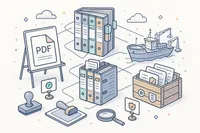
Not all documents have the same complexity. Navatom supports three distinct manual types — Simple (PDF) for single-file uploads like third-party reference documents, Comprehensive (Company) for structured multi-chapter manuals with section-level version control, and Third Party for external document libraries that need tracking without internal editing.
Simple manuals are uploaded as a single PDF and distributed as-is. Comprehensive manuals unlock the full hierarchical editor with chapters, sections, subsections, approval workflows, and collaborative editing.
Third Party manuals provide a controlled repository for vendor documentation, classification society guidelines, and regulatory publications.
- Simple (PDF) — single-file upload for quick distribution
- Comprehensive (Company) — structured multi-chapter manuals with full editing
- Third Party — controlled repository for external documents
- Each type has its own workflow, editor, and management interface
Hierarchical Document Structure

Organize complex manuals with a four-level hierarchy — Manual, Chapter, Section, and Subsection. Each chapter contains ordered sections; each section can nest subsections.
Custom ordering labels let you follow your organization's numbering scheme (1.2.3.a) rather than forcing a flat structure.
Chapters and sections can be created, moved, and reordered without disrupting the version history of their content. The table of contents is generated automatically and updates in real time as sections are added, moved, or deprecated.
Print the full table of contents or any chapter's section list as a formatted PDF.
- Four-level hierarchy: Manual → Chapter → Section → Subsection
- Custom ordering labels to match your numbering scheme (1.2.3.a)
- Auto-generated table of contents updates in real time
- Move and reorder sections without losing version history
- Print table of contents or revision lists as formatted PDFs
Built-in Collaborative Document Editor

Edit manual sections directly in the browser with a full-featured document editor — no desktop software required. The editor supports rich formatting, tables, images, headers, lists, and page layout controls with the same fidelity as desktop word processors. Documents are saved automatically and continuously.
Every editing session is secured with JWT token authentication and managed through a callback system that handles document persistence, force-save operations, and conflict resolution. The editor runs entirely within the platform — no external services, no file downloads, no version confusion.
- Full rich-text editing: tables, images, headers, lists, page layout
- Browser-based — no desktop software or plugins required
- JWT-secured editing sessions with automatic save
- Force-save and crash recovery for uninterrupted editing
- Callback-based persistence for reliable document state management
Real-Time Co-Authoring

Multiple authors can work on the same section simultaneously with real-time visibility of each other's changes. Two collaboration modes adapt to different working styles: Fast Mode shows every keystroke from co-authors in real time, while Strict Mode locks the paragraph each author is editing to prevent conflicts on critical documents.
Each collaborator's cursor and selections are visible in the editor with user attribution. An in-editor comment thread lets co-authors discuss changes without switching contexts.
The system tracks who wrote what, when — every modification is attributed to a specific user for full accountability.
- Fast Mode — see every keystroke from co-authors in real time
- Strict Mode — paragraph locking prevents conflicts on critical documents
- Live cursor and selection visibility with user attribution
- In-editor comment threads for contextual discussion
- Every modification attributed to a specific user with timestamp
Seven-Stage Content Lifecycle

Every section version follows a controlled lifecycle through seven stages — Draft, Waiting for Approval, Completed, Rejected, Released, Revised, and Deprecated. Only Released content is visible to crews on vessels.
The lifecycle enforces that every change goes through review before reaching ship personnel.
Draft versions can be edited freely by authors. When ready, the draft is sent for approval, moving to Waiting for Approval status.
Reviewers can approve (Completed → Released) or reject (back to Draft with feedback). Released content can be revised, creating a new draft while the current version remains active. Deprecated versions are archived but never deleted.
- Draft → Waiting for Approval → Completed → Released
- Rejected content returns to Draft with reviewer feedback
- Released content can be Revised (new draft, current version stays active)
- Deprecated versions archived permanently, never deleted
- Only Released content visible to ship crews
Track Changes & Revision Classification

Every modification to a section is tracked and classified into one of five revision types — Insertion (new content added), Deletion (content removed), Format Change (formatting modified), Style Definition Change (styles updated), and Moving (content relocated). This classification provides auditors and DPAs with a precise record of what changed between versions.
Track changes markup highlights insertions, deletions, and modifications with user attribution and timestamps. Accept or reject individual changes during the review process.
The revision classification drives compliance reporting — showing classification societies exactly what changed in each version and why.
- Five revision types: Insertion, Deletion, Format Change, Style Change, Moving
- Track-changes markup with user attribution and timestamps
- Accept or reject individual changes during review
- Revision classification drives compliance reporting
- Classification societies see exactly what changed between versions
Version History & Release Notes

Every section maintains a complete version history with numbered versions, release timestamps, author attribution, and release notes. Browse any previous version, compare changes between versions, and understand the evolution of every document in your safety management system.
Release notes document the rationale behind each revision — not just what changed, but why. Version numbers increment automatically on each release.
The full history chain from first draft to current release is preserved permanently, providing the documentary evidence that ISM auditors require.
- Complete version chain from first draft to current release
- Numbered versions with auto-increment on each release
- Release notes document the rationale behind each revision
- Browse and compare any two versions side by side
- Permanent audit trail for ISM compliance verification
Multi-Stage Draft Approval Workflow

Section drafts move through a structured approval pipeline: authors create and edit drafts, then submit for approval. Designated reviewers evaluate the content and either approve it for release or reject it with feedback.
Approved content is released to the fleet; rejected content returns to the author for revision.
The workflow enforces separation of duties — authors cannot self-approve. Approval and rejection actions record the reviewer's identity, timestamp, and comments.
The approval queue dashboard widget shows reviewers how many sections await their attention, preventing bottlenecks in the publication pipeline.
- Authors create drafts and submit for approval
- Reviewers approve or reject with recorded comments
- Separation of duties enforced — authors cannot self-approve
- Approval queue dashboard widget prevents bottlenecks
- Full audit trail of every approval and rejection decision
Ship-Specific Visibility Control

Control which manual sections are visible to each vessel in your fleet. Visibility can be set at the manual level (which ships can access the manual) and at the section level (which ships see specific sections within a manual). This ensures tanker-specific procedures don't appear on bulk carriers, and vice versa.
When a manual is published, the system generates ship-specific views that include only the sections each vessel is authorized to see. Visibility changes take effect immediately through the synchronization pipeline without requiring a full manual republish.
- Manual-level visibility: which ships can access the entire manual
- Section-level visibility: which ships see specific sections
- Tanker procedures appear only on tankers, bulk on bulk carriers
- Visibility changes propagate immediately via synchronization
- One-PDF export generates ship-specific consolidated documents
Crew Assignment & Completion Tracking

Assign manual sections to specific crew members or ranks and track who has read what. The assignment system records which personnel are required to read each section, and the completion tracker confirms when they have done so — with timestamps and acknowledgement records.
Dashboard metrics aggregate completion rates across the fleet, identifying vessels or sections with low read-through rates. Shore management can see at a glance which crews are up to date on critical procedures and which need follow-up.
Average reading time analytics help identify sections that may be too long or unclear.
- Assign sections to specific crew members or ranks
- Completion tracking with timestamps and acknowledgement records
- Fleet-wide completion rate aggregation on dashboards
- Average reading time analytics per section
- Identify vessels and sections with low read-through rates
Section-Level Comments & Annotations

Add threaded comments to any section for collaborative review and feedback. Comments support replies, edits, and deletion — creating a structured discussion thread attached to the specific content being discussed. Comment threads persist across draft versions for continuity.
Use comments during the approval process to provide specific feedback on content, request clarifications, or document review decisions. Comment history is preserved as part of the section's audit trail, providing evidence of the review process for compliance auditors.
- Threaded comments attached to specific sections
- Support for replies, edits, and deletion
- Comment history preserved across draft versions
- Used during approval process for structured feedback
- Comment activity recorded in the audit trail
Internal Cross-References

Link related sections across different manuals and chapters with formal internal references. When section A references section B, the system maintains that link through version changes, section moves, and manual reorganizations. Cross-references create a navigable web of interconnected documentation.
Cross-references are particularly valuable for ISM manual structures where safety procedures reference operational manuals, emergency plans reference crew training documents, and maintenance procedures reference equipment specifications. Broken references are detected automatically when sections are deprecated or removed.
- Formal links between sections across manuals and chapters
- References maintained through version changes and section moves
- Broken references detected when sections are deprecated
- Navigate between related procedures and specifications
- Essential for ISM manual structures with regulatory cross-links
PDF Export & One-PDF Consolidation

Export any manual as a formatted PDF document with a single click. The export includes the table of contents, chapter structure, and all section content — formatted for printing, archival, or submission to classification societies and regulatory authorities.
The One-PDF feature consolidates an entire manual into a single PDF per ship, including only the sections visible to that specific vessel. This ship-specific PDF can be stored onboard for offline reference, printed for bridge use, or submitted during port state control inspections.
- Export any manual as a formatted PDF with table of contents
- One-PDF consolidation per ship with visibility-filtered content
- Ship-specific PDFs for offline bridge reference
- Formatted for submission to classification societies
- Print revision lists for controlled document registers
50+ File Format Support
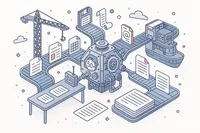
Work with documents in over fifty file formats — including DOCX, XLSX, PPTX, ODT, CSV, TXT, and PDF. The built-in conversion engine transforms documents between formats automatically, so your team can upload content in any format and the system handles the rest.
Format conversion happens server-side with full fidelity — tables, images, headers, and formatting are preserved across conversions. Upload a Word document, edit it in the browser, and export as PDF without ever installing desktop software.
- Native editing: DOCX, XLSX, PPTX, ODT
- Additional formats: CSV, TXT, PDF, and 40+ more
- Server-side conversion preserves formatting and layout
- Upload in any format, edit in browser, export as PDF
- No desktop software installation required
Document Security & Permissions

Control document access with granular permission levels — view-only, comment-only, review, edit, and full creator permissions. Restrict copying, downloading, and printing of sensitive documents. Digital watermarking tracks document origin and prevents unauthorized distribution.
All document editing sessions are secured with JWT authentication and encrypted data transfer. Permission settings are enforced both in the editor and at the API level, ensuring that access controls cannot be bypassed. AES-256 encryption protects sensitive operational documents in storage.
- Five permission levels: view, comment, review, edit, creator
- Restrict copying, downloading, and printing per document
- Digital watermarking for document origin tracking
- JWT-authenticated editing sessions with encrypted transfer
- AES-256 encryption for sensitive documents in storage
Full-Text Search

Search across all manuals, chapters, and sections with instant full-text search powered by a dedicated search index. Find specific procedures, policy references, or regulatory citations across your entire document library in seconds — regardless of how many manuals and sections your organization maintains.
Search results are ranked by relevance and filtered by manual type, status, and ship assignment. The search index updates in real time as sections are created, modified, or released, ensuring that search results always reflect the latest approved content.
- Instant search across all manuals, chapters, and sections
- Elasticsearch-powered with real-time index updates
- Results ranked by relevance, filterable by type and status
- Customer-scoped indexes ensure complete data isolation
- Search reflects latest approved content immediately on release
Dashboard & Analytics

Monitor your document management program with three dedicated dashboard widgets — Section Completion Rate tracks what percentage of assigned sections have been read by crews, Average Reading Time measures engagement with each section, and Approval Queue Depth shows how many sections are waiting for reviewer attention.
Dashboard metrics aggregate across your entire fleet, with drill-down capability to individual vessels, manuals, and sections. Identify which manuals have the lowest completion rates, which sections take the longest to read, and where approval bottlenecks are slowing publication. Use the data to continuously improve your documentation program.
- Section Completion Rate — percentage of assigned sections read
- Average Reading Time — engagement metrics per section
- Approval Queue Depth — sections waiting for reviewer attention
- Fleet-wide aggregation with drill-down to individual vessels
- Data-driven improvement of your documentation program
Audit & Compliance Integration

Link manual sections directly to audit checklist items in the Navatom Audit module. When auditors assess compliance with specific ISM Code requirements, they can reference the exact manual section that documents the relevant procedure — creating a direct, traceable link between your safety management system documentation and your audit program.
This integration eliminates the manual cross-referencing that wastes hours during audits. Auditors see which manual sections support each checklist item, and DPAs can verify that every regulatory requirement is covered by approved, current documentation.
Changes to linked manual sections automatically flag the associated checklist items for review.
- Link manual sections to audit checklist items
- Auditors reference exact sections during ISM assessments
- Changes to linked sections flag associated checklist items
- Direct traceability from regulatory requirement to documentation
- Eliminates manual cross-referencing during audit preparation
Three Manual Types

Not all documents have the same complexity. Navatom supports three distinct manual types — Simple (PDF) for single-file uploads like third-party reference documents, Comprehensive (Company) for structured multi-chapter manuals with section-level version control, and Third Party for external document libraries that need tracking without internal editing.
Simple manuals are uploaded as a single PDF and distributed as-is. Comprehensive manuals unlock the full hierarchical editor with chapters, sections, subsections, approval workflows, and collaborative editing.
Third Party manuals provide a controlled repository for vendor documentation, classification society guidelines, and regulatory publications.
- Simple (PDF) — single-file upload for quick distribution
- Comprehensive (Company) — structured multi-chapter manuals with full editing
- Third Party — controlled repository for external documents
- Each type has its own workflow, editor, and management interface
Hierarchical Document Structure

Organize complex manuals with a four-level hierarchy — Manual, Chapter, Section, and Subsection. Each chapter contains ordered sections; each section can nest subsections.
Custom ordering labels let you follow your organization's numbering scheme (1.2.3.a) rather than forcing a flat structure.
Chapters and sections can be created, moved, and reordered without disrupting the version history of their content. The table of contents is generated automatically and updates in real time as sections are added, moved, or deprecated.
Print the full table of contents or any chapter's section list as a formatted PDF.
- Four-level hierarchy: Manual → Chapter → Section → Subsection
- Custom ordering labels to match your numbering scheme (1.2.3.a)
- Auto-generated table of contents updates in real time
- Move and reorder sections without losing version history
- Print table of contents or revision lists as formatted PDFs
Built-in Collaborative Document Editor

Edit manual sections directly in the browser with a full-featured document editor — no desktop software required. The editor supports rich formatting, tables, images, headers, lists, and page layout controls with the same fidelity as desktop word processors. Documents are saved automatically and continuously.
Every editing session is secured with JWT token authentication and managed through a callback system that handles document persistence, force-save operations, and conflict resolution. The editor runs entirely within the platform — no external services, no file downloads, no version confusion.
- Full rich-text editing: tables, images, headers, lists, page layout
- Browser-based — no desktop software or plugins required
- JWT-secured editing sessions with automatic save
- Force-save and crash recovery for uninterrupted editing
- Callback-based persistence for reliable document state management
Real-Time Co-Authoring

Multiple authors can work on the same section simultaneously with real-time visibility of each other's changes. Two collaboration modes adapt to different working styles: Fast Mode shows every keystroke from co-authors in real time, while Strict Mode locks the paragraph each author is editing to prevent conflicts on critical documents.
Each collaborator's cursor and selections are visible in the editor with user attribution. An in-editor comment thread lets co-authors discuss changes without switching contexts.
The system tracks who wrote what, when — every modification is attributed to a specific user for full accountability.
- Fast Mode — see every keystroke from co-authors in real time
- Strict Mode — paragraph locking prevents conflicts on critical documents
- Live cursor and selection visibility with user attribution
- In-editor comment threads for contextual discussion
- Every modification attributed to a specific user with timestamp
Seven-Stage Content Lifecycle
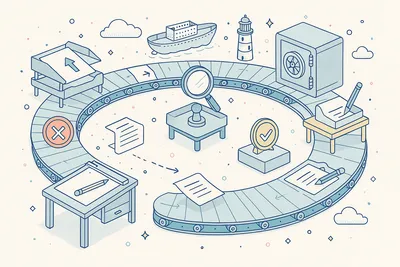
Every section version follows a controlled lifecycle through seven stages — Draft, Waiting for Approval, Completed, Rejected, Released, Revised, and Deprecated. Only Released content is visible to crews on vessels.
The lifecycle enforces that every change goes through review before reaching ship personnel.
Draft versions can be edited freely by authors. When ready, the draft is sent for approval, moving to Waiting for Approval status.
Reviewers can approve (Completed → Released) or reject (back to Draft with feedback). Released content can be revised, creating a new draft while the current version remains active. Deprecated versions are archived but never deleted.
- Draft → Waiting for Approval → Completed → Released
- Rejected content returns to Draft with reviewer feedback
- Released content can be Revised (new draft, current version stays active)
- Deprecated versions archived permanently, never deleted
- Only Released content visible to ship crews
Track Changes & Revision Classification

Every modification to a section is tracked and classified into one of five revision types — Insertion (new content added), Deletion (content removed), Format Change (formatting modified), Style Definition Change (styles updated), and Moving (content relocated). This classification provides auditors and DPAs with a precise record of what changed between versions.
Track changes markup highlights insertions, deletions, and modifications with user attribution and timestamps. Accept or reject individual changes during the review process.
The revision classification drives compliance reporting — showing classification societies exactly what changed in each version and why.
- Five revision types: Insertion, Deletion, Format Change, Style Change, Moving
- Track-changes markup with user attribution and timestamps
- Accept or reject individual changes during review
- Revision classification drives compliance reporting
- Classification societies see exactly what changed between versions
Version History & Release Notes

Every section maintains a complete version history with numbered versions, release timestamps, author attribution, and release notes. Browse any previous version, compare changes between versions, and understand the evolution of every document in your safety management system.
Release notes document the rationale behind each revision — not just what changed, but why. Version numbers increment automatically on each release.
The full history chain from first draft to current release is preserved permanently, providing the documentary evidence that ISM auditors require.
- Complete version chain from first draft to current release
- Numbered versions with auto-increment on each release
- Release notes document the rationale behind each revision
- Browse and compare any two versions side by side
- Permanent audit trail for ISM compliance verification
Multi-Stage Draft Approval Workflow

Section drafts move through a structured approval pipeline: authors create and edit drafts, then submit for approval. Designated reviewers evaluate the content and either approve it for release or reject it with feedback.
Approved content is released to the fleet; rejected content returns to the author for revision.
The workflow enforces separation of duties — authors cannot self-approve. Approval and rejection actions record the reviewer's identity, timestamp, and comments.
The approval queue dashboard widget shows reviewers how many sections await their attention, preventing bottlenecks in the publication pipeline.
- Authors create drafts and submit for approval
- Reviewers approve or reject with recorded comments
- Separation of duties enforced — authors cannot self-approve
- Approval queue dashboard widget prevents bottlenecks
- Full audit trail of every approval and rejection decision
Ship-Specific Visibility Control

Control which manual sections are visible to each vessel in your fleet. Visibility can be set at the manual level (which ships can access the manual) and at the section level (which ships see specific sections within a manual). This ensures tanker-specific procedures don't appear on bulk carriers, and vice versa.
When a manual is published, the system generates ship-specific views that include only the sections each vessel is authorized to see. Visibility changes take effect immediately through the synchronization pipeline without requiring a full manual republish.
- Manual-level visibility: which ships can access the entire manual
- Section-level visibility: which ships see specific sections
- Tanker procedures appear only on tankers, bulk on bulk carriers
- Visibility changes propagate immediately via synchronization
- One-PDF export generates ship-specific consolidated documents
Crew Assignment & Completion Tracking

Assign manual sections to specific crew members or ranks and track who has read what. The assignment system records which personnel are required to read each section, and the completion tracker confirms when they have done so — with timestamps and acknowledgement records.
Dashboard metrics aggregate completion rates across the fleet, identifying vessels or sections with low read-through rates. Shore management can see at a glance which crews are up to date on critical procedures and which need follow-up.
Average reading time analytics help identify sections that may be too long or unclear.
- Assign sections to specific crew members or ranks
- Completion tracking with timestamps and acknowledgement records
- Fleet-wide completion rate aggregation on dashboards
- Average reading time analytics per section
- Identify vessels and sections with low read-through rates
Section-Level Comments & Annotations

Add threaded comments to any section for collaborative review and feedback. Comments support replies, edits, and deletion — creating a structured discussion thread attached to the specific content being discussed. Comment threads persist across draft versions for continuity.
Use comments during the approval process to provide specific feedback on content, request clarifications, or document review decisions. Comment history is preserved as part of the section's audit trail, providing evidence of the review process for compliance auditors.
- Threaded comments attached to specific sections
- Support for replies, edits, and deletion
- Comment history preserved across draft versions
- Used during approval process for structured feedback
- Comment activity recorded in the audit trail
Internal Cross-References

Link related sections across different manuals and chapters with formal internal references. When section A references section B, the system maintains that link through version changes, section moves, and manual reorganizations. Cross-references create a navigable web of interconnected documentation.
Cross-references are particularly valuable for ISM manual structures where safety procedures reference operational manuals, emergency plans reference crew training documents, and maintenance procedures reference equipment specifications. Broken references are detected automatically when sections are deprecated or removed.
- Formal links between sections across manuals and chapters
- References maintained through version changes and section moves
- Broken references detected when sections are deprecated
- Navigate between related procedures and specifications
- Essential for ISM manual structures with regulatory cross-links
PDF Export & One-PDF Consolidation
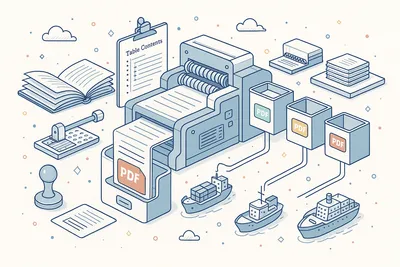
Export any manual as a formatted PDF document with a single click. The export includes the table of contents, chapter structure, and all section content — formatted for printing, archival, or submission to classification societies and regulatory authorities.
The One-PDF feature consolidates an entire manual into a single PDF per ship, including only the sections visible to that specific vessel. This ship-specific PDF can be stored onboard for offline reference, printed for bridge use, or submitted during port state control inspections.
- Export any manual as a formatted PDF with table of contents
- One-PDF consolidation per ship with visibility-filtered content
- Ship-specific PDFs for offline bridge reference
- Formatted for submission to classification societies
- Print revision lists for controlled document registers
50+ File Format Support
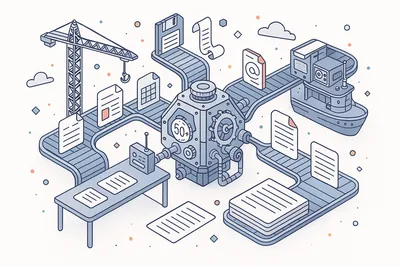
Work with documents in over fifty file formats — including DOCX, XLSX, PPTX, ODT, CSV, TXT, and PDF. The built-in conversion engine transforms documents between formats automatically, so your team can upload content in any format and the system handles the rest.
Format conversion happens server-side with full fidelity — tables, images, headers, and formatting are preserved across conversions. Upload a Word document, edit it in the browser, and export as PDF without ever installing desktop software.
- Native editing: DOCX, XLSX, PPTX, ODT
- Additional formats: CSV, TXT, PDF, and 40+ more
- Server-side conversion preserves formatting and layout
- Upload in any format, edit in browser, export as PDF
- No desktop software installation required
Document Security & Permissions
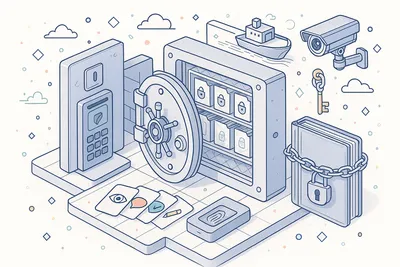
Control document access with granular permission levels — view-only, comment-only, review, edit, and full creator permissions. Restrict copying, downloading, and printing of sensitive documents. Digital watermarking tracks document origin and prevents unauthorized distribution.
All document editing sessions are secured with JWT authentication and encrypted data transfer. Permission settings are enforced both in the editor and at the API level, ensuring that access controls cannot be bypassed. AES-256 encryption protects sensitive operational documents in storage.
- Five permission levels: view, comment, review, edit, creator
- Restrict copying, downloading, and printing per document
- Digital watermarking for document origin tracking
- JWT-authenticated editing sessions with encrypted transfer
- AES-256 encryption for sensitive documents in storage
Full-Text Search

Search across all manuals, chapters, and sections with instant full-text search powered by a dedicated search index. Find specific procedures, policy references, or regulatory citations across your entire document library in seconds — regardless of how many manuals and sections your organization maintains.
Search results are ranked by relevance and filtered by manual type, status, and ship assignment. The search index updates in real time as sections are created, modified, or released, ensuring that search results always reflect the latest approved content.
- Instant search across all manuals, chapters, and sections
- Elasticsearch-powered with real-time index updates
- Results ranked by relevance, filterable by type and status
- Customer-scoped indexes ensure complete data isolation
- Search reflects latest approved content immediately on release
Dashboard & Analytics

Monitor your document management program with three dedicated dashboard widgets — Section Completion Rate tracks what percentage of assigned sections have been read by crews, Average Reading Time measures engagement with each section, and Approval Queue Depth shows how many sections are waiting for reviewer attention.
Dashboard metrics aggregate across your entire fleet, with drill-down capability to individual vessels, manuals, and sections. Identify which manuals have the lowest completion rates, which sections take the longest to read, and where approval bottlenecks are slowing publication. Use the data to continuously improve your documentation program.
- Section Completion Rate — percentage of assigned sections read
- Average Reading Time — engagement metrics per section
- Approval Queue Depth — sections waiting for reviewer attention
- Fleet-wide aggregation with drill-down to individual vessels
- Data-driven improvement of your documentation program
Audit & Compliance Integration

Link manual sections directly to audit checklist items in the Navatom Audit module. When auditors assess compliance with specific ISM Code requirements, they can reference the exact manual section that documents the relevant procedure — creating a direct, traceable link between your safety management system documentation and your audit program.
This integration eliminates the manual cross-referencing that wastes hours during audits. Auditors see which manual sections support each checklist item, and DPAs can verify that every regulatory requirement is covered by approved, current documentation.
Changes to linked manual sections automatically flag the associated checklist items for review.
- Link manual sections to audit checklist items
- Auditors reference exact sections during ISM assessments
- Changes to linked sections flag associated checklist items
- Direct traceability from regulatory requirement to documentation
- Eliminates manual cross-referencing during audit preparation
Technical
Under the Hood
Architecture and engineering behind Manuals — data handling, real-time sync, and interface design.
Server-Side Document Grids with Advanced Filtering
All manual, chapter, and section views use server-side pagination and filtering to handle thousands of documents without performance degradation. Filter by manual type, status, ship assignment, author, and date range with instant response times regardless of library size.
Seven-Stage Content Lifecycle State Machine
Section versions follow a formal state machine through Draft, Waiting for Approval, Completed, Rejected, Released, Revised, and Deprecated stages. Each transition enforces validation rules, records the actor and timestamp, and triggers downstream events including notifications and synchronization.
JWT-Secured Document Editing Sessions
Every collaborative editing session is authenticated and authorized via signed JWT tokens. The token carries document permissions, user identity, and session metadata — ensuring that only authorized personnel can edit, comment on, or view each document.
Real-Time Collaborative Editing Engine
The document editing engine supports concurrent multi-user editing with operational transformation for conflict resolution. A callback-based persistence model ensures that document state is saved continuously and recoverable after any interruption, including force-save for crash recovery.
Elasticsearch Full-Text Indexing Pipeline
Manual and section content is indexed in Elasticsearch for instant full-text search across the entire document library. The indexing pipeline processes content on creation, modification, and release — with customer-scoped indexes ensuring complete data isolation between organizations.
Office-Ship Synchronization
Manual data synchronizes between office and vessel deployments over satellite links with automatic conflict resolution. Vessels maintain a full local copy of all assigned manuals for offline access, with changes merging seamlessly when connectivity is restored.
One-PDF Consolidation Engine
The PDF engine compiles ship-specific manual versions by resolving visibility rules, ordering chapters and sections, and generating a single consolidated PDF per vessel. Per-ship PDF mappings are maintained and regenerated automatically when content or visibility changes.
Immutable Event Logging
Every action — creation, editing, approval, rejection, release, deprecation, assignment, and comment — is recorded in an append-only event log with full user attribution and timestamp. The log is tamper-evident and serves as the primary audit trail for regulatory compliance.
Same Category
Related Modules
Other Documentation modules that integrate with Manuals.
Distribute company circulars and notices with read-receipt tracking and acknowledgements.
Design and deploy custom digital forms for inspections, checklists, and reporting.
Solutions
Explore Solutions
Compliance and operational solutions powered by Manuals.
ISM Code Compliance
Navatom supports ISM Code compliance with integrated document control, audit management, non-conformity tracking, and safety management system tools across your entire fleet.
SIRE 2.0 Readiness
Get your fleet inspection-ready for SIRE 2.0 with Navatom. Track findings, manage non-conformities, and maintain audit trails across all vessel operations in real time.
Ready to try Manuals?
Start your free trial today and see how Manuals fits into your fleet operations.