Permit to Work on Ships: Why Permits Fail and How to Fix Them
A practical guide to the permit to work on ships in 2026: the enclosed space entry permit under MSC.581(110), hot work, energy isolation and SIMOPS, why permits still fail on board, and what changes when the permit becomes digital.
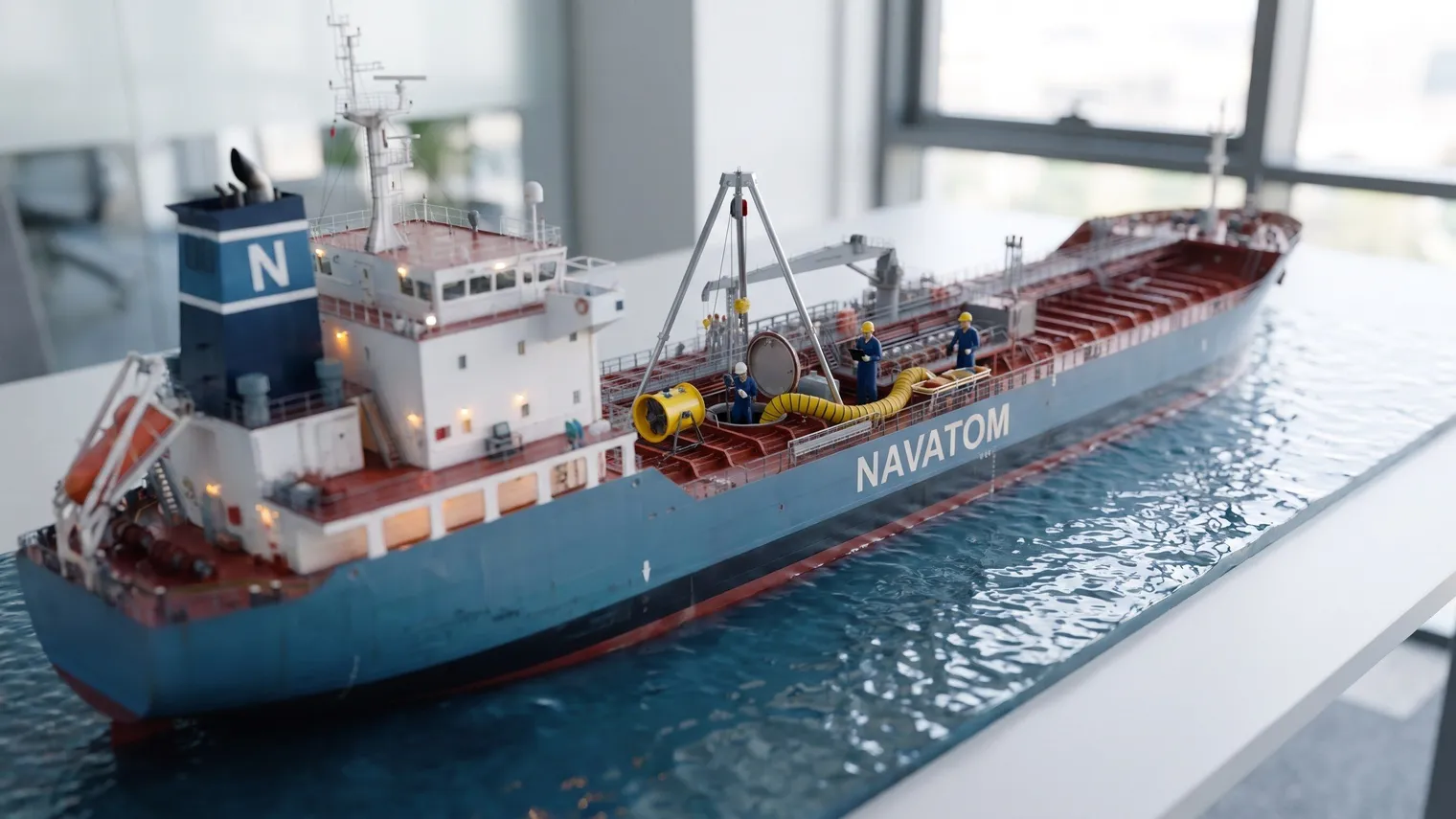
Between 1996 and 2026, InterManager counted 354 enclosed space accidents on merchant ships. In October 2026 the ship managers' association published a survey of more than 900 seafarers on why people still die in them. The answer was not a missing permit to work or a missing procedure.
They pointed at overly complex paperwork, too little time and manpower, commercial pressure and thin practical training. "The industry does not need more paperwork for the sake of paperwork, it needs practical measures that work onboard," said Captain Kuba Szymanski, InterManager's secretary general.
This guide is for the people who write, run and audit the permit to work system on ships. That means masters, chief officers, chief engineers, superintendents and designated persons ashore (DPAs). It covers what the rules ask for in 2026, where permits fail, and what changes when the permit lives in the ship's system instead of on a pad.
- 354Accidents recorded, 1996 to 2026InterManager's count across merchant ship types
- 900+Seafarers surveyedFindings published in October 2026
- 14Accidents in 2022, and again in 2023Casualties rose from 18 to 34
- 14Deaths in 2024, initial countEight seafarers and six contractors, in 11 accidents
Source: InterManager, via gCaptain (October 2026) and Marine Insight (March 2025)
What a permit to work system is for
A permit to work is a written authorization to do one hazardous job, in one place, for a set time, once its hazards are controlled. It names who asked for the work, who checked it, who does it and who closes it. Steamship Mutual's guidance adds a step that is easy to skip: before signing, the responsible officer should personally check that every listed measure is in place.
A permit does not make a job safe on its own. It records that someone assessed the hazards, isolated what needed isolating, tested the air, and that the right people agreed. When those signatures stand in for the checks behind them, the permit becomes the paperwork Szymanski describes.
A permit also has a life: it is requested, approved, issued, handed over at a change of watch, sometimes extended or suspended, and finally closed. Steamship Mutual's guidance says validity should not normally exceed 24 hours and that the person doing the work countersigns. It also says the permit is revoked once the work has been checked.
The International Safety Management (ISM) Code does not use the word "permit". Its section 7 asks the company to establish procedures, plans and instructions, including checklists, for key shipboard operations. Hazardous work is the clearest example, so safety management systems carry a permit to work procedure.
| Instrument | What it covers | In force or published |
|---|---|---|
| ISM Code, section 7 | Procedures, plans and checklists for key shipboard operations | 1998 for the first ship types |
| SOLAS regulation III/19 | Enclosed space entry and rescue drills at least every two months | 2015 |
| SOLAS regulation XI-1/7 | Portable atmosphere testing instruments on board | 2016 |
| IMO MSC/Circ.1084 | Principles for hot work on board all types of ships | 2003 |
| IMO resolution MSC.581(110) | Revised recommendations for entering enclosed spaces | 2025 |
| ISGOTT, 6th edition | Safety guide for oil tankers and terminals, including work permits | 2020 |
| UK MCA Code of Safe Working Practices | Chapter 14 on permit to work systems, chapter 15 on enclosed spaces | 2026 edition |
Source: IMO; OCIMF; UK Maritime and Coastguard Agency
Which jobs need a permit to work
The list differs by company, but the core is the same across fleets. The IMO's enclosed space recommendations name the permits that often run alongside an entry permit: energy and electrical isolation, hot work and working at height.
Tankers follow the International Safety Guide for Oil Tankers and Terminals (ISGOTT) for work around cargo systems. Many fleets add work over the side, diving and work on pressurized systems.
Each permit type answers one hazard with its own controls. Those controls belong in the permit type, not with the person filling in the form. That is what keeps a permit to work system consistent across a fleet.
| Permit | Main hazard | Typical controls |
|---|---|---|
| Enclosed space entry | Too little oxygen, toxic or flammable air | Ventilation, gas tests, attendant, rescue plan |
| Hot work | Fire and explosion | Gas-free area, fire watch, fire equipment ready |
| Energy isolation | Stored energy released during the work | Lock-out, tag-out, isolation verified |
| Working aloft or over the side | Falls and dropped objects | Harness, secured tools, someone watching |
| Electrical work | Shock and arc flash | Isolation, testing for dead, insulated tools |
| Diving | Suction, propeller and thruster movement | Sea suctions, propulsion and thrusters isolated |
Typical controls only: each permit type in the safety management system sets its own. Source: Compiled by Navatom; enclosed space and hot work rows from IMO MSC.581(110) and MSC/Circ.1084
Why enclosed spaces still kill
Enclosed space accidents are not rare events that the statistics smooth away. InterManager's records show 14 accidents in 2022 and 14 in 2023, with casualties rising from 18 to 34. Its initial count for 2024 was 11 accidents that killed eight seafarers and six contractors.
InterManager's 2025 figures show where the risk sits: by ship type, bulk carriers account for 41% of the accidents and tankers for 23%. By location, cargo holds and their access areas account for 51% and cargo oil tanks for 18%. Most accidents involve senior ranks or stevedores: experience does not protect anyone from an atmosphere they cannot see.
Location and ship type are separate breakdowns, so the bars do not add up to 100%. Source: InterManager, via Marine Insight, March 2025
The survey findings published in October 2026 explain why procedures alone have not closed the gap. Seafarers described paperwork too complex to follow under time pressure, crews too small for the job, and inspections that check the forms rather than whether the measures work. InterManager's answer includes simpler procedures, more practical drills, reliable gas detection, wearable gas monitors and digital entry permits.
| What seafarers reported | What the permit system can do |
|---|---|
| Overly complex paperwork | Ask only what the job's permit type needs, and name the gaps instead of handing over a blank form |
| Too little time and manpower | Plan the permit with the job, so the roles are named before the work starts |
| Commercial pressure | Make the stop visible: a permit that is not ready cannot be issued |
| Inspections that check the forms | Keep the evidence on the permit: readings, isolations, signatures |
| Too little practical training | Drill entry and rescue every two months, and keep the record |
The left column is from InterManager's survey; the right column is our reading of each point. Source: InterManager survey of more than 900 seafarers, via Safety4Sea, October 2026
The enclosed space entry permit, step by step
In June 2025 the IMO's Maritime Safety Committee (MSC) adopted resolution MSC.581(110), the Revised Recommendations for Entering Enclosed Spaces Aboard Ships. It replaces the previous version, A.1050(27), which the IMO Assembly revoked in December 2025. For any enclosed space entry procedure written or reviewed today, this is the reference.
An enclosed space is one that may hold a hazardous atmosphere or lack oxygen, and has limited openings, poor ventilation or was not designed for people to occupy continuously. The resolution asks companies to keep an Enclosed Space Register, on board and ashore. It lists every such space with its connected spaces, its ventilation and its "safe to enter" or "unsafe to enter" signage.
Who does what in an enclosed space entry
Only the master, or a responsible person the master nominates, may authorize entry. MSC.581(110) defines that person at management level: the master, chief mate, chief engineer or second engineer. The resolution also states plainly that single-person entry into an enclosed space is not permitted.
| Role | Who | What they do |
|---|---|---|
| Responsible person | Master, chief mate, chief engineer or second engineer | Authorizes entry and issues the permit |
| Competent person | A person with operational-level competency | Judges whether a dangerous atmosphere is present or may arise |
| Attendant | A crew member at the entrance | Watches the entrants, keeps communications, starts the emergency procedure |
| Entrants | The team doing the job | Wear personal gas monitors and leave at any change |
The attendant never enters before help arrives, and no one enters an enclosed space alone. Source: IMO resolution MSC.581(110), 2025
The four readings and the eight-hour limit
Before anyone goes in, the space needs steady readings on four counts: 20.9% oxygen, carbon dioxide below 0.5%, flammable gas below 1% of the lower flammable limit (LFL), and toxic gases below half their occupational exposure limit (OEL). Test with ventilation stopped and at several levels, because gases settle in layers. An oxygen or flammable reading says nothing about toxicity, and the reverse is also true.
- 20.9%OxygenBy volume, as a steady reading
- < 0.5%Carbon dioxide5,000 ppm
- < 1% LFLFlammable gasWhere the risk assessment shows a flammable risk
- < 50% OELToxic gasesOf each gas's occupational exposure limit
Test with ventilation stopped, at several levels, with certified and calibrated instruments. Source: IMO resolution MSC.581(110), paragraph 7.4, 2025
The permit's validity comes from the risk assessment and should never exceed eight hours. It becomes invalid if ventilation stops, if conditions change, or if the space is left unattended. Testing continues while people are inside, and the space is retested after any break before anyone goes back in.
- AssessRisk assessment by a competent person; the space checked in the Enclosed Space Register
- Isolate and ventilatePipelines, valves and power blanked or isolated; the space ventilated
- TestFour steady readings at several levels, with ventilation stopped
- IssuePermit issued by the master or responsible person, for eight hours at most
- Enter and monitorAttendant at the entrance, personal monitors, retests at intervals
- CloseEveryone out, the space secured, the permit closed
Source: IMO resolution MSC.581(110), 2025
Rescue is part of the permit
The resolution is blunt about rescue: never go in independently. The attendant raises the alarm and does not enter before help arrives, and rescue equipment waits at the entrance, tested and ready.
Under SOLAS regulation III/19, crew with entry or rescue duties take part in an enclosed space entry and rescue drill at least once every two months. Each drill covers protective equipment, communications, the atmosphere testing instruments, rescue equipment and procedures, and first aid and resuscitation. Teams that keep their drill records in a ship drill management system can show the two-month rhythm at any inspection.
The enclosed space entry checklist
The example permit in the resolution's appendix runs in five parts: pre-entry preparation, pre-entry checks for each entrant, entry where the atmosphere is suspect, personnel entry and completion. The enclosed space entry checklist below follows the same order.
Pre-entry preparation
- Space identified and risk assessed
- Pipelines, valves and power isolated
- Space ventilated, then tested at several levels
- Rescue and resuscitation equipment at the entrance
- Communications and emergency signals agreed
- Attendant named and briefed
Each entrant
- Permission to enter received from the master or responsible person
- Communication procedures and reporting interval agreed
- Emergency and evacuation procedures understood
Suspect atmosphere
- Personal gas monitors, and rescue harnesses where practicable
Personnel entry
- Names and times in and out recorded
Completion
- Everyone out and counted
- Space closed and secured
- Permit closed
Source: Based on the example permit in IMO resolution MSC.581(110), Appendix 2
Hot work permits: fire where fuel is never far away
The IMO's Principles for hot work on board all types of ships, MSC/Circ.1084 from 2003, still frame the hot work permit. Hot work means welding, cutting, any naked flame, and heating or spark-generating tools. It belongs in a workshop wherever possible; outside it, the master or designated safety officer decides whether the job is justified and can be done safely.
Outside the workshop, the circular asks for a permit to work system and a responsible officer who is not doing the work. The area is prepared and isolated, fire watches cover adjacent compartments, and the precautions stay until the risk of fire is gone. One line belongs on every hot work permit form: "Absence of guidance should be regarded as prohibition, rather than approval."
Decide
- Could the job be done in the workshop?
- Master or designated safety officer confirms it is justified and safe
- Permit to work raised
Prepare
- Responsible officer named, not doing the work
- Written plan agreed by everyone involved
- Work area prepared and isolated
- Fire equipment ready, fire watch in adjacent spaces
Finish
- Isolation and fire precautions kept until the risk of fire is gone
Source: IMO MSC/Circ.1084, Principles for hot work on board all types of ships, 2003
The MT Patriot explosion shows what happens when these steps thin out. On November 10, 2023, cutting on the inert gas line of the Indian-flag tanker at a Chennai repair berth set off an explosion in the port slop tank. One shore worker died and three were injured.
India's Directorate General of Shipping found that gas freeing had not met ISGOTT standards and the inert gas line was poorly isolated. Neither the risk assessment nor the hot work permit had been approved by the company, and the port issued its hot work permit "for an extended duration" without verifying the conditions. Its recommendations include company approval of the risk assessment for repairs at a repair berth, hot work limited preferably to daylight, and regular testing of the work area and the spaces next to it.
Energy isolation: the permit inside the permit
Every permit that opens a pipe, a tank or a panel depends on isolation. MSC.581(110) asks for pipelines, valves and electrical power to be blanked or isolated before entry, and treats isolation as a permit of its own where needed. Not every isolation is equally secure.
The UK Health and Safety Executive's guidance HSG253 ranks isolations in three standards. Positive isolation separates the plant completely, by removing a spool piece or fitting a spade. Proved isolation relies on valves with a bleed that proves they hold, and non-proved isolation on valves alone.
| Standard | How it works | Typical methods | Security |
|---|---|---|---|
| Positive | Complete separation from the rest of the system | Spool piece removed, spade or blank fitted | Highest |
| Proved | Valves, with a bleed that proves they hold | Double or single block and bleed | Middle |
| Non-proved | Valves, with no way to prove they hold | Single or double valve | Lowest |
For enclosed space entry and long isolations, HSE's guidance says to go further: physical disconnection or spades. Source: UK Health and Safety Executive, HSG253, The safe isolation of plant and equipment
The valve is only half of it: the lock is the other half. A report in the Nautical Institute's MARS scheme describes a crew member sent up the foremast while the bridge foghorn controls were tagged but not locked. As the report puts it, a tag alone "does not prevent the stored energy" from being released by accident.
In a bulk carrier case, a fuel injection valve blew out under residual pressure and killed a crew member. The start air valve had probably not been closed, and the turning gear not engaged. Those lock-out steps were in the engine manual, but nothing on board made sure they were done.
Shipyard periods need the same discipline, and a report by the UK Marine Accident Investigation Branch (MAIB) shows why. In the Equinox Seas report, a fitter fell about 10 meters down an open ventilation trunk on a bulk carrier in a Greek repair yard. No permits had been issued while the ship was in the yard, and the risks of removing the fan had not been assessed.
| Case | What happened | Where the permit system failed |
|---|---|---|
| MT Patriot, 2023 | Explosion in a slop tank during cutting at a repair berth; one dead, three injured | No company approval of the risk assessment or the hot work permit; inert gas line poorly isolated |
| Equinox Seas, 2023 | A fitter fell about 10 m down an open ventilation trunk in a shipyard; one dead | No permits issued in the yard; the risks of removing the fan not assessed |
| Bulk carrier, 2024 report | A fuel injection valve blown out by residual pressure; one dead | Start air valve probably open and turning gear not engaged; nothing checked the lock-out steps |
Source: India DG Shipping Casualty Circular 01 of 2025; MAIB report 12/2024; Marine Insight, 2024
SIMOPS: keeping clashing jobs apart
Simultaneous operations, or SIMOPS, means performing two or more operations concurrently. On a ship the dangerous clash is usually local and quiet. Think of hot work near the outlet of a tank being ventilated, or a pump restarted while someone works on its suction line.
Shipyard periods multiply the clashes. In the Equinox Seas case, the MAIB found that poor communication and coordination between the yard and the ship's staff let safety gaps go unaddressed. When contractors and crew work on board at the same time, one permit system and one list of open permits have to cover both.
A paper permit catches a clash only if the officer signing it remembers every other open permit. The dependable fix is a rule written in advance: which work must not run together, in one section or across the ship, and who may override. Each company sets its own matrix in its safety management system; the one below is an example of the shape.
| Work already under way | New hot work permit | New enclosed space entry permit |
|---|---|---|
| Bunkering or cargo transfer | Block, anywhere on board | Warn, same section |
| Tank ventilation or gas freeing | Block, same section | Warn, same section |
| Enclosed space entry | Block, same section | Warn, same section |
| Hot work | Warn, same section | Block, same section |
| Isolation lifted on a connected system | Warn, same section | Block, same section |
Illustrative only: each company sets its own matrix in its safety management system. Source: Example by Navatom
What a digital permit changes
Most of the failures above are failures of follow-through: a check signed but not done, a reading that went stale, an isolation that was tagged but not locked, a second job nobody connected to the first. Systems like Navatom move the permit into the ship's own system so that the rules travel with it.
Navatom's digital permit to work is part of its Operations module. The office defines permit types across 15 work categories, from hot work and enclosed space entry to diving.
Each type sets its roles, signatures, gas limits, isolation, validity, checklist and conflict rules. A permit copies its type when it is raised on board, so a later change never alters a permit already in progress.
The permit cannot be issued until its gas test, isolations, risk assessment, checklist and required signatures are in place, and a message names each gap. Seven roles, from authorizing officer and gas tester to standby person and fire watch, sign at the six stages shown below. At a change of watch, the handover records the incoming team's names and a briefing confirmation.
- ApprovalThe permit is approved for the job, place and time
- IssuanceIssued only when gas, isolation, risk assessment, checklist and the other Issuance signatures are complete
- ExtensionMore time, within the type's maximum validity and number of extensions
- HandoverThe incoming team named and briefed at a change of watch
- CompletionThe work reported finished
- ClosureThe permit closed, with its readings, isolations and full history
Source: Navatom Operations
Each permit type sets the gases to test, from oxygen and flammable gas to hydrogen sulfide, carbon monoxide and carbon dioxide, with their safe limits. A permit is issued only if the latest passing reading is younger than its retest interval, 60 minutes when the type sets none. An enclosed space entry permit is valid for eight hours at most, the same ceiling MSC.581(110) sets.
Isolation points carry their lock-out tag number and record who applied and who verified them. Issue is refused if any point is less secure than the minimum the permit type accepts.
Conflict rules on each permit type block or warn when a permit would run alongside conflicting work, in the same ship section or anywhere on board. Only crew with the override right can proceed past a warning.
A maintenance job can point to the permit type it needs. Ashore, superintendents follow every vessel's permits in the office app. On the KPI board, 114 Operations KPIs measure permit flow, gas testing, isolation and simultaneous work across the fleet.
| Question | Paper permit | Navatom permit |
|---|---|---|
| Is everything ready before issue? | Depends on the officer's own check | Issue refused until gas, isolation, risk assessment, checklist and signatures are complete |
| Is the gas reading current at issue? | Written once on the form | Issue refused if the latest passing reading is older than its retest interval, 60 minutes by default |
| Does another job conflict? | Depends on remembering the other open permits | Conflict rules block or warn, for the ship section or the whole ship |
| Who is on the job after the watch changes? | A signature box, if it is filled in | The handover names the incoming team and records the briefing |
| What does the office see? | The form, at the next audit | Every permit in the office app, and permit KPIs across the fleet |
Source: Navatom Operations
Key takeaways
- A permit to work is a record of checks, not a substitute for them. The responsible officer checks every measure in person before signing.
- Enclosed spaces still kill: 354 accidents between 1996 and 2026, and in InterManager's figures half happen in cargo holds and their access areas.
- MSC.581(110) is the 2025 reference: steady readings of 20.9% oxygen, CO2 below 0.5%, under 1% LFL and under 50% OEL, a permit of eight hours at most, and no single-person entry.
- Rescue is planned before entry: an attendant who never goes in alone, equipment at the entrance, and drills at least every two months.
- Hot work needs its own permit, with a responsible officer who is not doing the work and fire watches next door.
- Isolate positively where you can, and lock what you tag.
- Write SIMOPS rules in advance, so a clash is caught by the system instead of by memory.
Captain Szymanski asked for practical measures that work on board, not more paperwork for its own sake. Digital entry permits are on InterManager's own list, next to simpler procedures and more practical drills. See how Navatom Operations handles the permit to work on ships, from permit type to closure.
Frequently asked questions
What is a permit to work on a ship?
A permit to work on a ship is a written authorization for one hazardous job, in a stated place and for a stated time. It is issued only after the hazards are assessed and controlled, and it names who requests, approves, carries out and closes the work. It records gas tests, isolations and precautions, and it is part of the safety management system the ISM Code requires.
Which jobs need a permit to work on a ship?
The jobs that need a permit to work on a ship usually include enclosed space entry, hot work, energy and electrical isolation, and working at height. Tankers add work around cargo systems under ISGOTT, and many fleets add work over the side, diving and work on pressurized systems. Each company sets its own list in its safety management system.
How long is an enclosed space entry permit valid?
An enclosed space entry permit should never be valid for more than eight hours under IMO resolution MSC.581(110). The risk assessment sets its validity within that limit. The permit becomes invalid if ventilation stops, if conditions change or if the space is left unattended.
What oxygen level is safe for enclosed space entry?
Enclosed space entry needs a steady oxygen reading of 20.9% by volume, under IMO resolution MSC.581(110). The same resolution asks for carbon dioxide below 0.5% and flammable gas below 1% of the lower flammable limit. Toxic gases should read below 50% of their occupational exposure limit.
Who can authorize hot work on a ship?
The master or the designated safety officer decides whether hot work outside the workshop is justified and can be done safely, under IMO MSC/Circ.1084. The work runs under a permit to work, overseen by a responsible officer who is not doing the hot work.
What is SIMOPS on a ship?
SIMOPS, or simultaneous operations, means two or more operations running at the same time, where one can create a hazard for the other. A typical case on a ship is hot work near a tank being ventilated. A permit to work system controls SIMOPS with written rules on which work must not run together.